About Lungta Art Festival
Welcome to the Lungta Art Festival (LAF), a year – long festival celebrating the goodness in every one of us. The LAF is a national art festival inspired by the profound symbolism of the Lungta (Wind Horse) and rooted in Bhutanese spiritual values, ecological mindfulness, and creative expression. The festival presents the unfolding of one’s own authentic presence and goodness.
The festival harnesses the creative arts as a medium to provide a serene space for spiritual and personal reflection, inviting participants to reconnect with these timeless values. This contemplative approach offers an opportunity to deepen one’s innate unconditional kindness, value harmonious interconnectedness, and spark curiosity.

The year 2026, being the Year of the Horse, holds special symbolic significance in Bhutanese culture. This auspicious alignment provides a meaningful foundation for the Lungta Art Festival, creating a timely opportunity to reflect on inner virtues, personal responsibility, and collective well-being.
Under the leadership of the founder and artist Asha Kama, VAST Bhutan organised the Lungta Art Festival 2026 with the objectives to:
- Promote the interconnectedness of social-cultural and spiritual values for societal growth, peace and harmony;
- Create awareness and stewardship on environmental protection needs in the fragile mountains and the ecosystem;
- Foster positive social and behavioural change through a shared, transformative process of community engagement.
The festival is a year-long journey and unfolds in three transformative phases: Unveil (Discovery & Introduction), Untangle (Resolution & Restoration), and Unleash (Transformation & Empowerment).
Purpose of the festival
The Lungta Art Festival (LAF) 2026 is founded on the profound symbolism of the Lungta—a significant emblem of vitality, good fortune, and the power to overcome obstacles. In honoring the birth anniversary of Her Majesty, who embodies the spirit of the Lungta through her compassionate leadership and strength, the festival serves as a national tribute to the values of loving-kindness that inspire Bhutan and the world.
The purpose of the festival is to advocate for, and deepen our collective understanding of basic human goodness: the innate compassion and ethical responsibility that unite all sentient beings. By weaving contemporary arts with Bhutan’s rich spiritual and cultural heritage, LAF offers a journey of personal reflection and spiritual reconnection. The festival strives to inspire transformative action for environmental stewardship, cultural renewal, and a future of harmonious coexistence.
By bridging tradition and contemporary art practice, the Lungta Art Festival 2026 aspires to be a living offering that uplifts basic human goodness and the collective spirit through creativity, compassion, and collaboration.

Lungta in Contemporary Art: Reviving Tradition, Inspiring Change
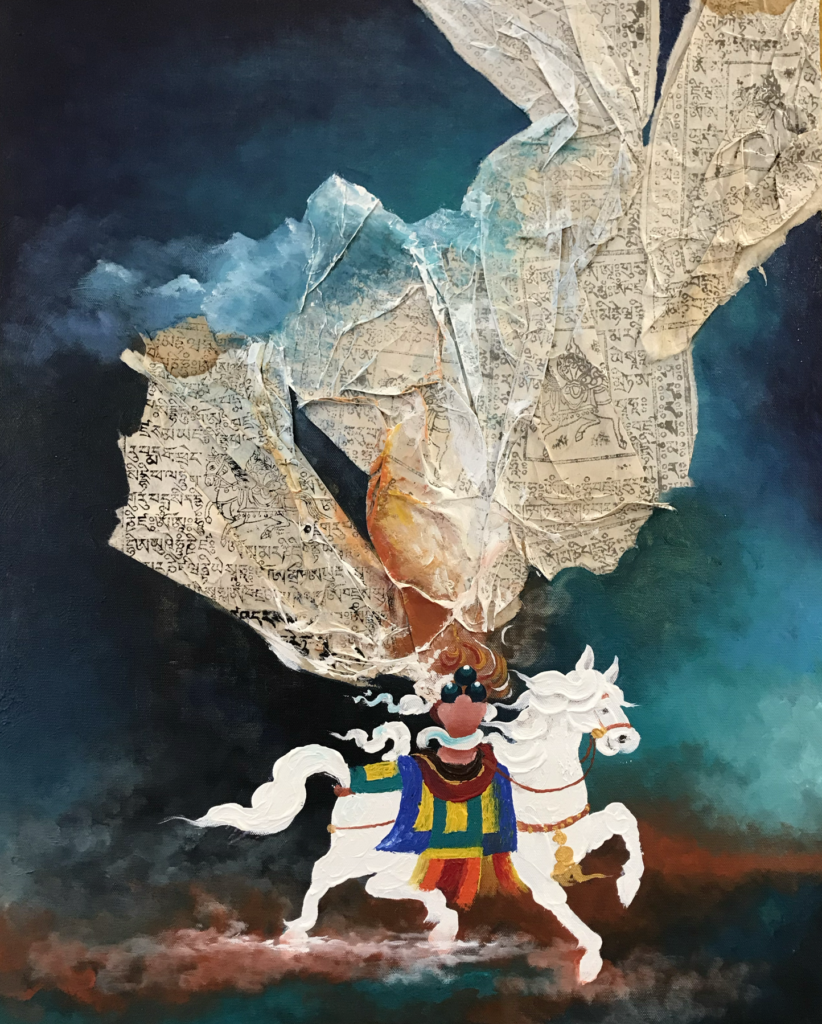
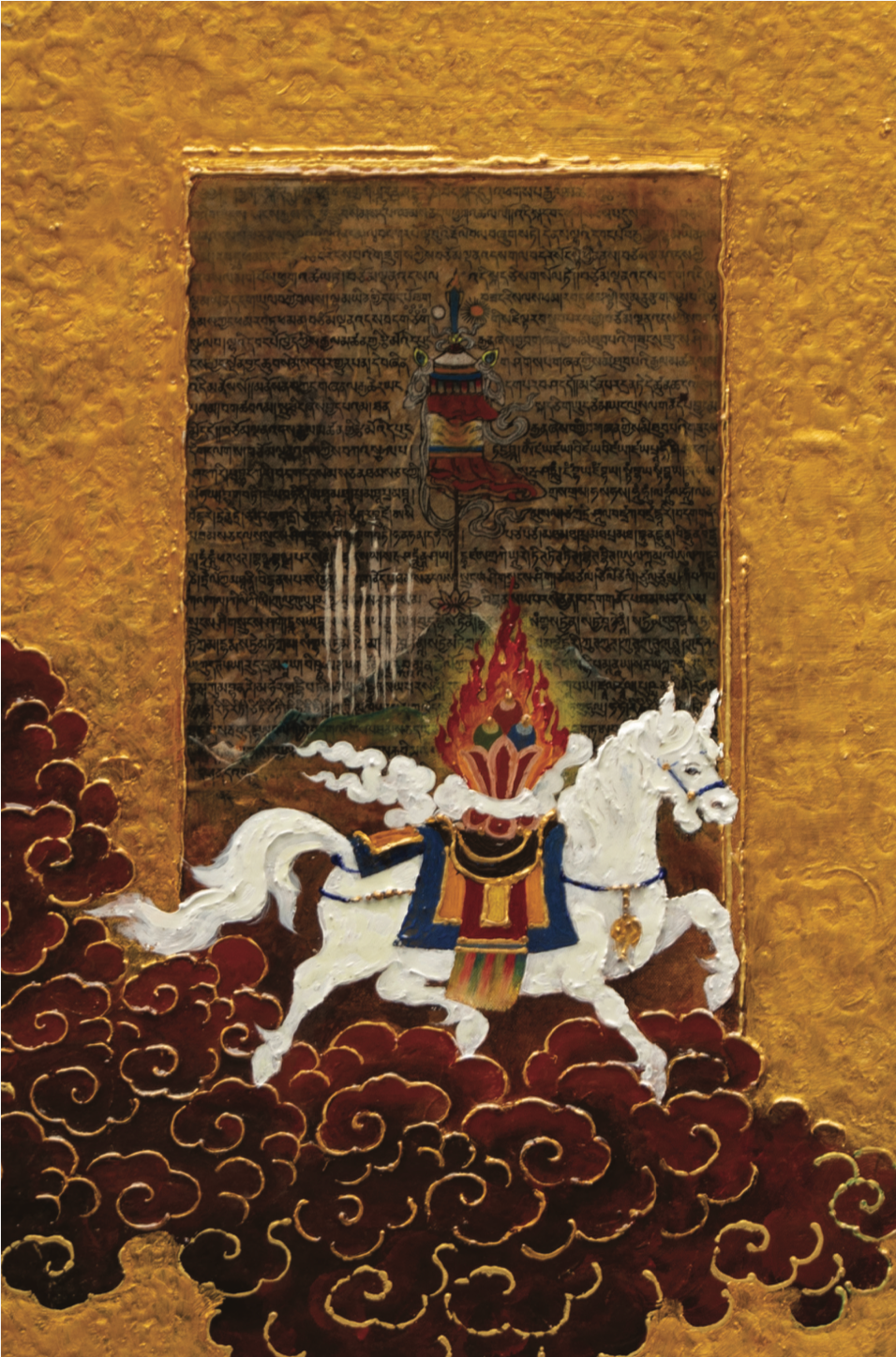
Envisioned as more than just an art festival, it aspires to be a transformative experience, practice and realise basic human goodness. The Lungta is a very significant element and subject in traditional Bhutanese art and stories depicting victory, protection, and well-being.
Drawing on the wisdom from the Buddhist philosophy on interdependence and harmonious coexistence, the festival’s foundational theme highlights the interconnectedness between humans, nature and the unseen world. Every being’s single action has an impact, however big or small. Mindfulness or carelessness causes a ripple effect on the wider ecosystem and beyond. Artists are integral to the community, they tell stories. And because of their art on walls, wood and handmade paper- we know our history. The arts are so crucial to the well-being of society and sustainable development. This LAF, the artists bring to you their journey of understanding Lungta, their aspirations and their transformation.
The festival invites you, through the language of art and contemplation, to engage in a visual dialogue for change. In current times, with endless choices, our timeless values are the most precious.
Weaving art with Bhutan’s profound social, cultural and spiritual heritage, the Lungta Art Festival aspires to illuminate how basic human goodness can inspire collective action for environmental stewardship, cultural renewal and harmonious coexistence. A quiet reflection, a mindful sitting and several artistic expressions, sets the festival alive. You are invited to the Lungta journey at your own pace.
Lungta : Social, Cultural and Environmental Consciousness
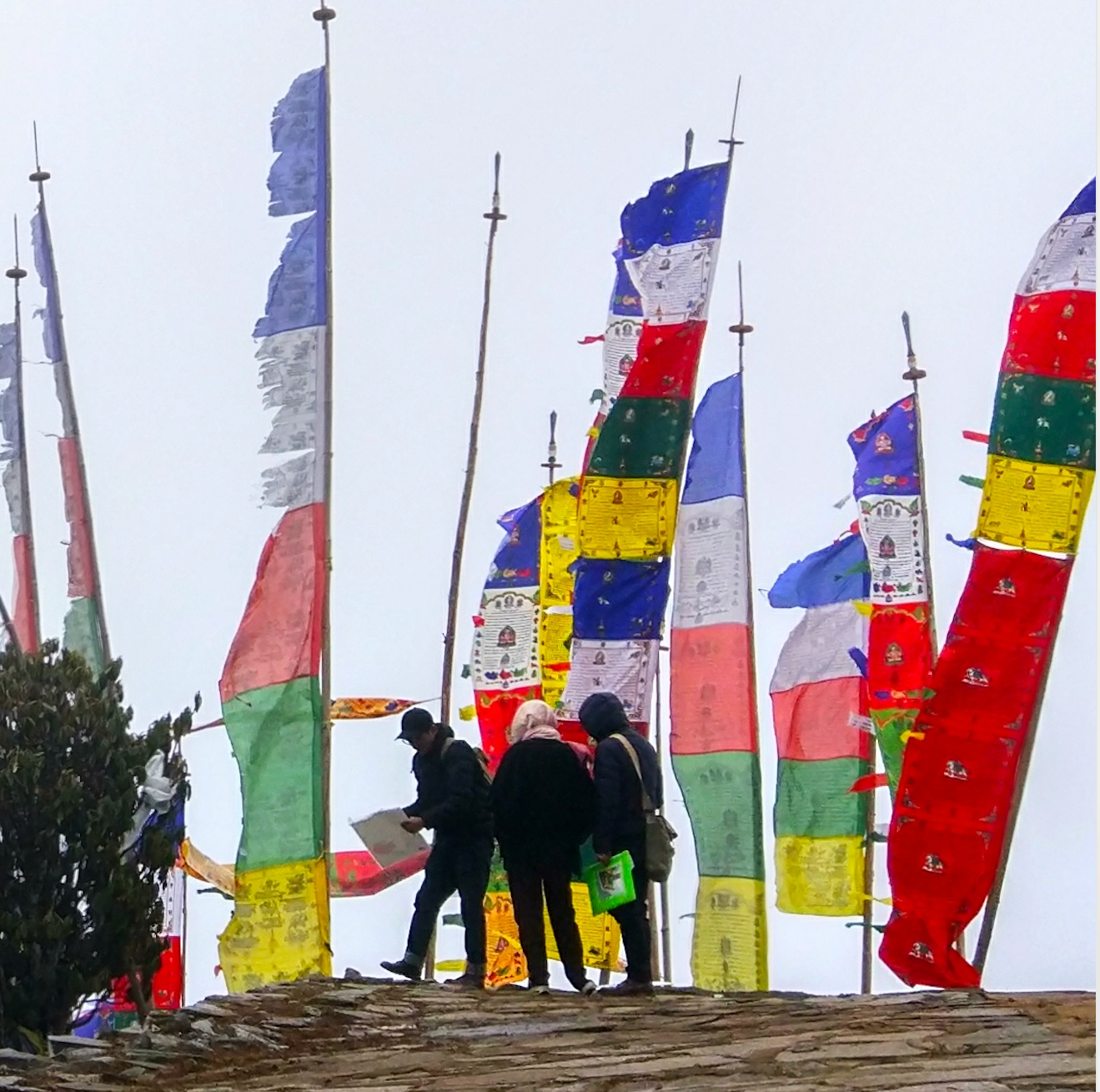
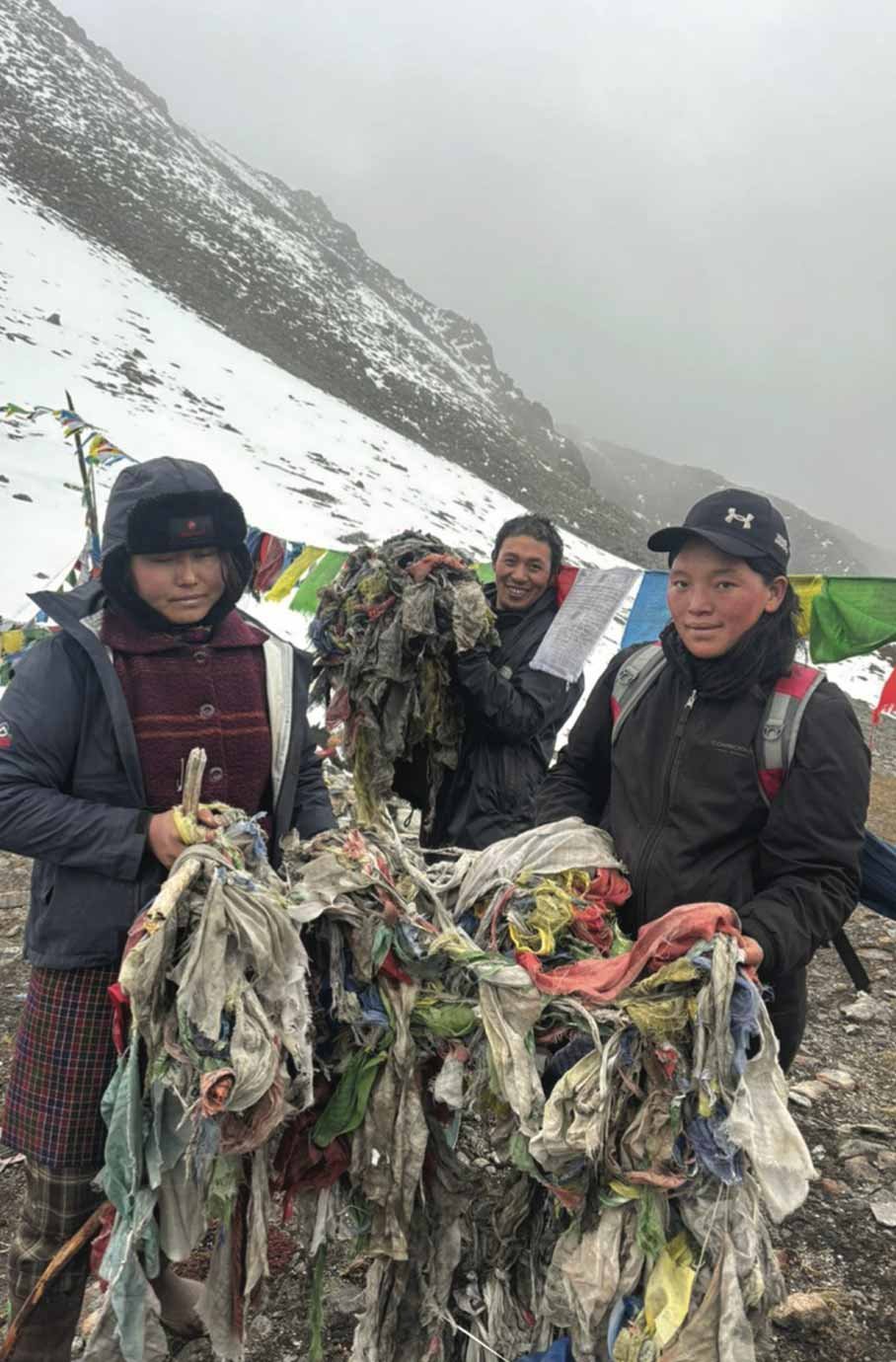
Lungta is a multi-faceted trans-Himalayan social, cultural, and spiritual concept denoting good fortune and success. Lungta is an intangible inner life force that influences the wellbeing of a person. It is a common social and cultural belief that when one’s Lungta is flying high, one is healthy, lucky, successful, and prosperous. Likewise, when one’s Lungta is running low or diminished, one is likely to encounter obstacles and misfortunes. The flags are considered sacred, and it is taboo to disrespect or desecrate them—such as by trampling, discarding in unclean areas, or using them for unintended mundane purposes. They are required to be hoisted on high mountain tops or over rivers and water bodies, allowing the positive energy or blessings to flow freely in all directions, ushering in peace, prosperity, and happiness.
The Lungta also represents the progress of spiritual practitioners. As they continue on their spiritual path, the Lungta serves as a steadfast companion, guiding them forward on their quest for awakening. Additionally, our Lungta is also how we respond and react to the air, water, earth, wind, and fire— the environment we live in. In the spirit of loving-kindness, the festival advocates, raises awareness, and deepens the understanding of basic human goodness, and the ethical responsibility that can literally unite all beings – seen and unseen.
At the heart of LAF is the desire to address an emerging environmental concern: the increasing presence of synthetic micro-plastic polluting the pristine mountain ecosystems of the Himalayan region. Synthetic micro-plastics take centuries to decompose, and are increasingly contaminating the region’s natural resources, including its glaciers, snow, air and water sources, posing significant health risks to animals, people, and the environment as a whole. The lack of organic and sustainable alternatives for carry bags, flags, etc is a current challenge. However, the choice is ours and it is also our responsibility to be conscious and aware. The festival offers a visual with the aspiration to adopt sustainable practices for our shared world.
The Three Phases of the Lungta Art Festival
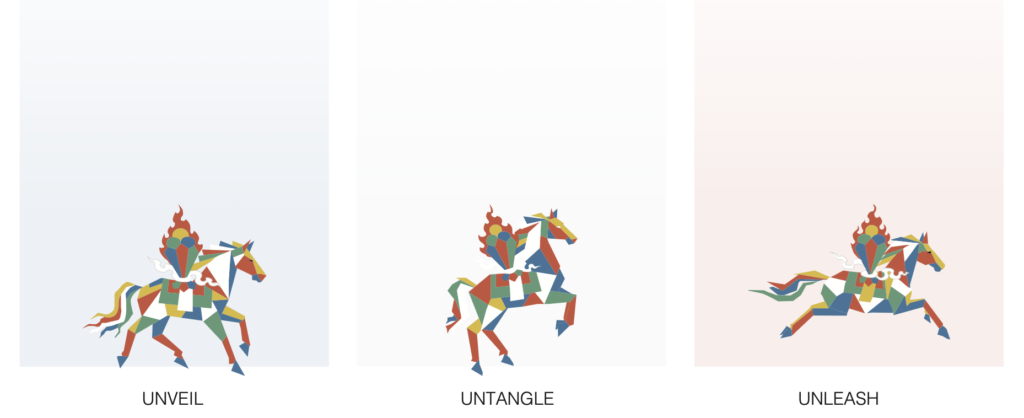
1. Unveil – Discovery
This is a gentle yet profound invitation to rediscover the inherent goodness within ourselves—the innate compassion, clarity, and courage that define humanity. The opportunity to reflect on the interconnectedness between humans, nature, and beyond our senses. Every movement, speech and thought reconnects us with the natural rhythms of the environment, rooted in the five elements—earth, water, fire, air, and space—that sustain all life.
The windhorse tradition, practiced with devotion, hoisting prayer flags on mountain tops and riverbanks, continues today as a deeply personal act. But in the race to have our prayers fly the highest, we may forget their deeper meaning or the purpose of the windhorse. The flags are hoisted and they remain there, we don’t ever look back and our intention is may be lost. A sacred act of offering becomes a silent accumulation, as the neglected flags pile up in sacred landscapes. This phase of the festival uncovers what has been buried beneath routine—a rediscovery of reverence, humility, and the quiet beauty of conscious prayer and aspiration.
2. Untangle – Resolution & Restoration
As we find the balance in spirituality, cultural conservation, environment and societal change, it demands a shift—from discovery to responsibility. It is a call to action: to untangle the chaos we have collectively created, physically and spiritually. The soiled prayer flags—meant to carry our aspirations—now litter the ground, forgotten by those who raised them. The wind may still carry our intentions and our aspirations, but the Earth carries our waste.
Revealing the urgency of ecological consciousness draws attention to the materials used; non-biodegradable, synthetic, environmentally harmful—and the lack of unconsciousness and social accountability in caring for what is sacred.
To untangle is to restore—to restore meaning, reverence, and environmental balance, which is our aspiration. It is about choosing sustainable alternatives, educating ourselves, our communities, and reviving traditional practices. In Bhutan, a nation guided by Gross National Happiness, true happiness includes the wellbeing of all beings—humans, animals, mountains, rivers, and forests alike.
Here, restoration is not just environmental—it is spiritual, cultural, and ethical – an aspiration for our inherent goodness, clarity, and compassion to become a daily practice.
3. Unleash – Transformation & Empowerment
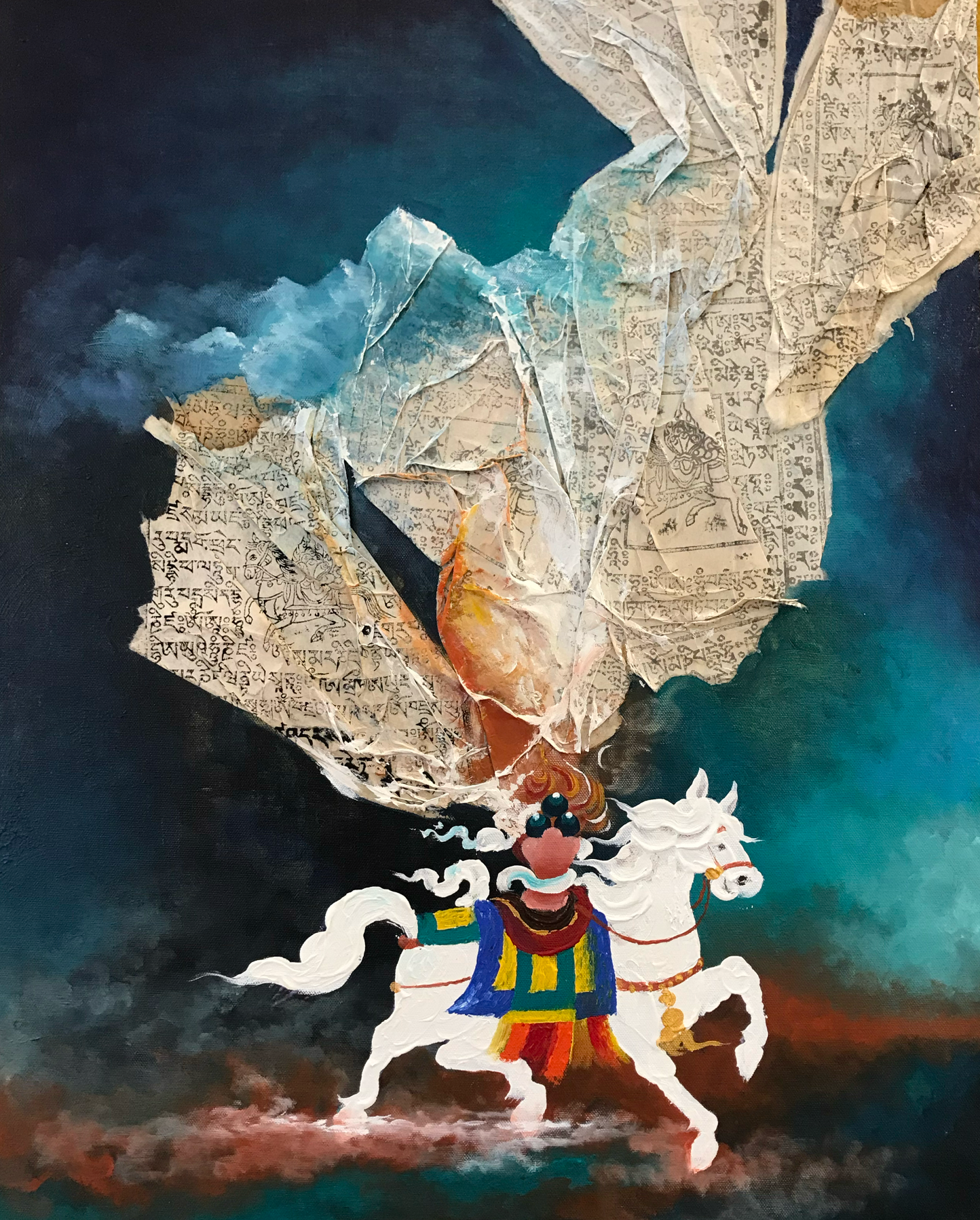
A moment of transformation and awakening. The Lungta rises once more, not just as a symbol, but as a collective force of empowered individuals and communities.
This is where celebration meets responsibility, and where art becomes action. Through mindful expression, spirituality, and participatory art, the Wind Horse is unleashed—its energy no longer tangled in neglect, but elevated by awareness and purpose.
- Transform thought into aspirations
- Transform speech into prayerful dialogue
- Transform action into sustainable practice
It is an ownership of spiritual and social responsibility; a tradition honoring the past while embracing the future. Through the Lungta, we are reminded that sustainability is not a hype; it is a sacred duty. And preservation is not about replication—it is about evolution with social consciousness.
The Lungta rises, soars—not alone, but with us and within us.