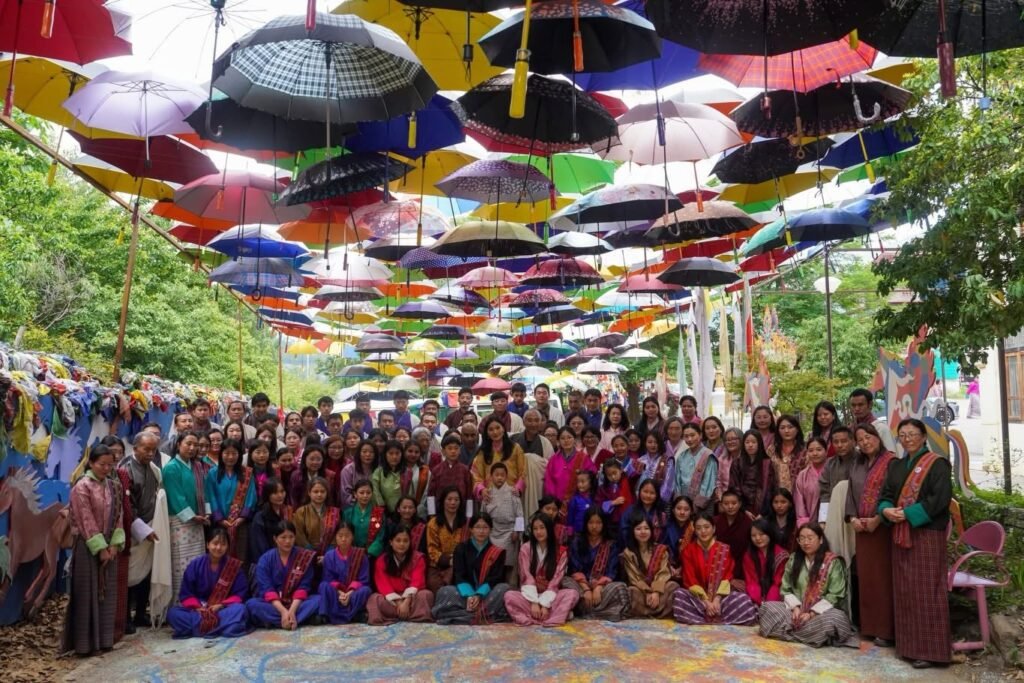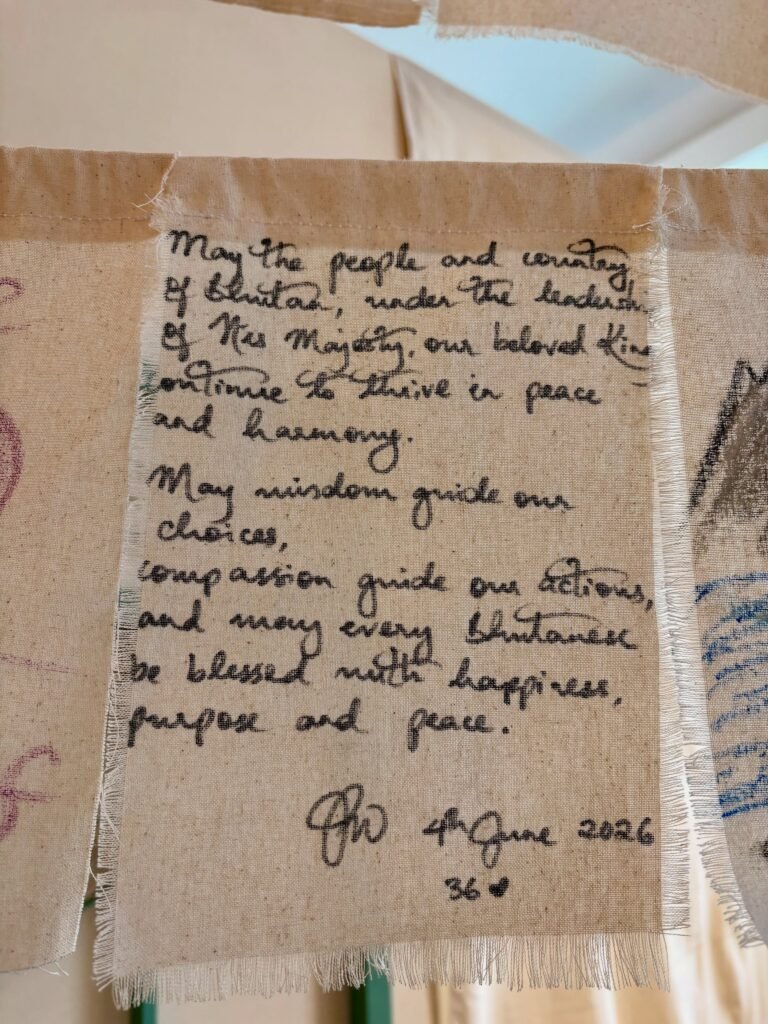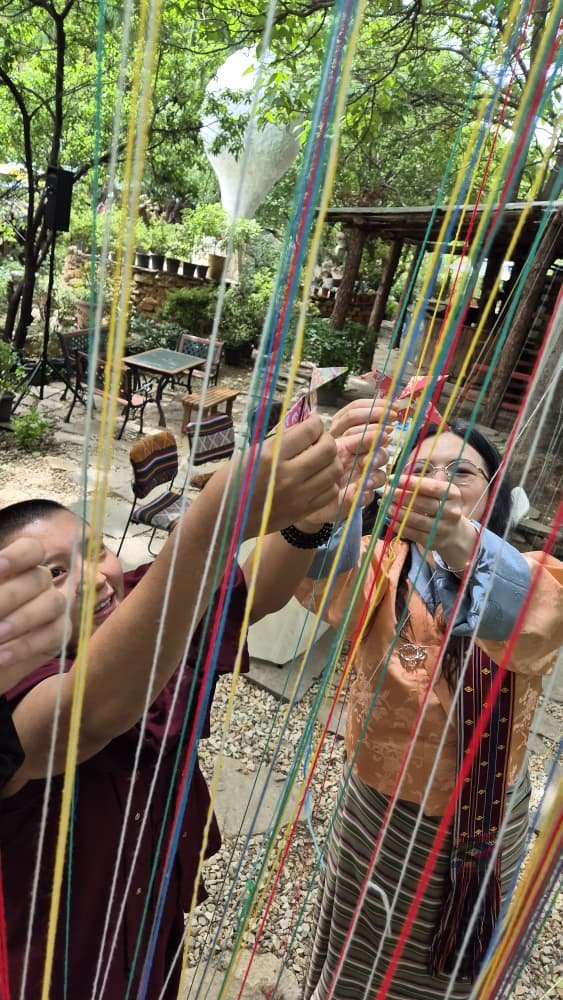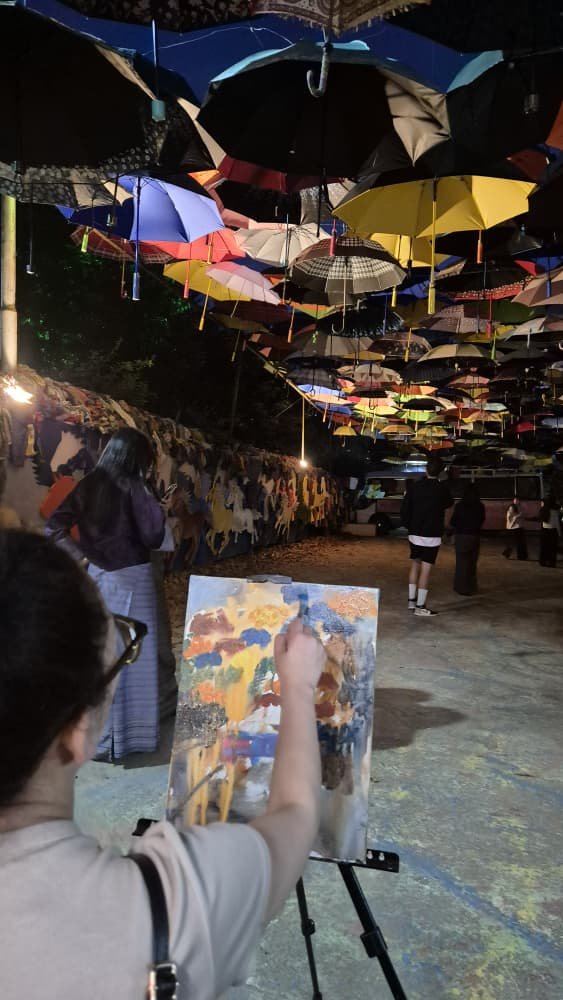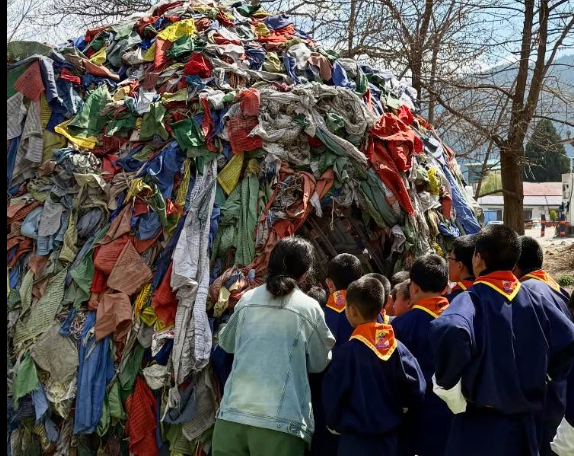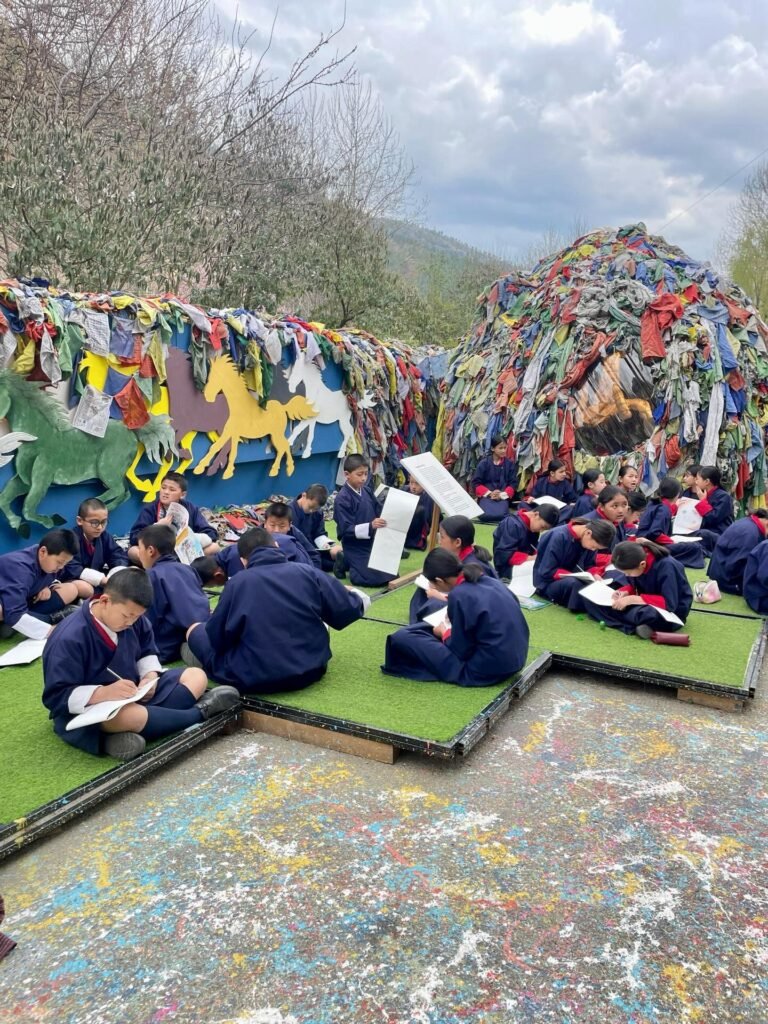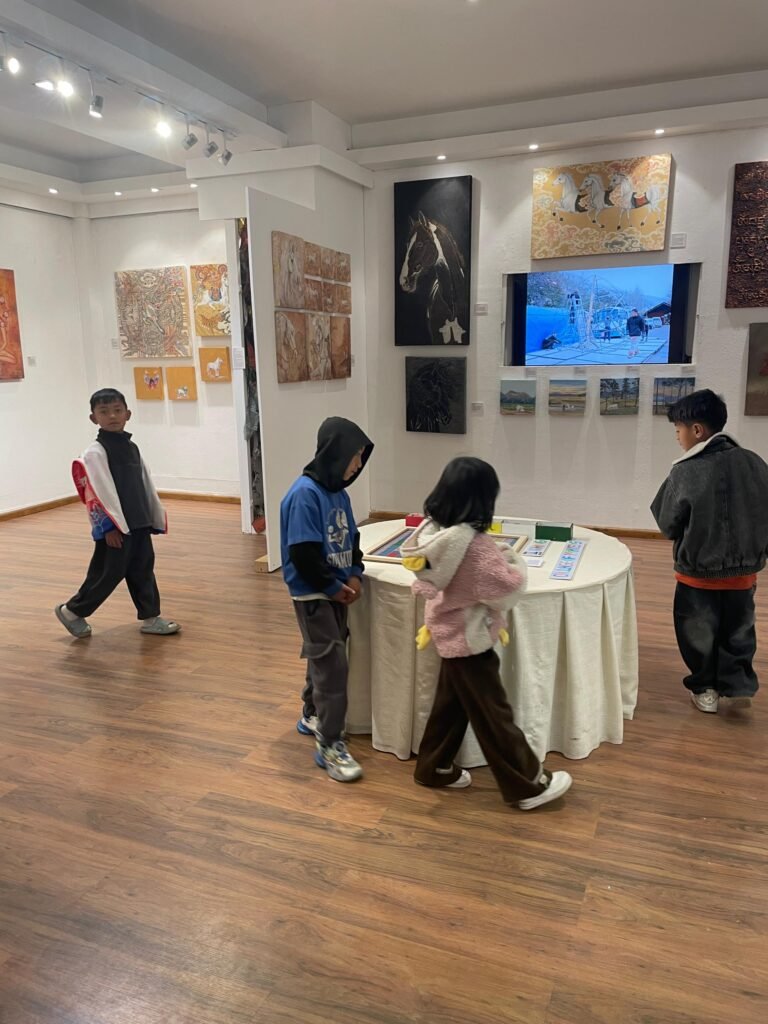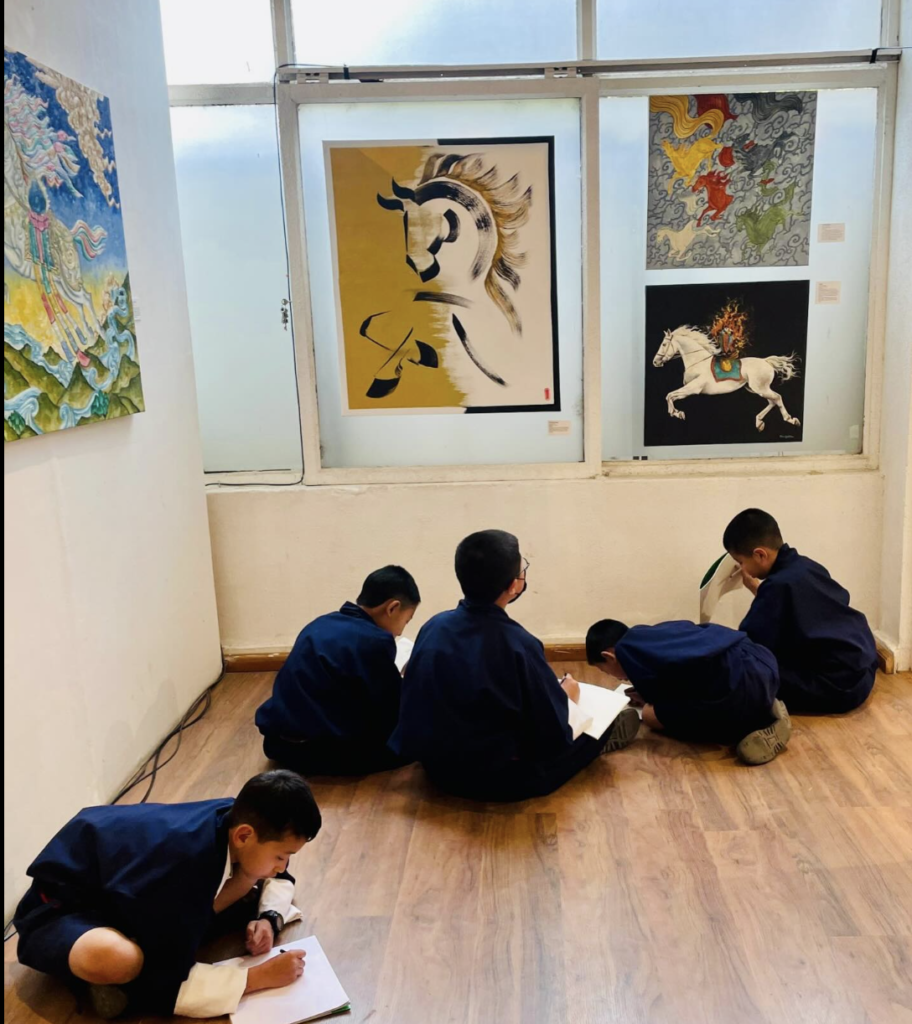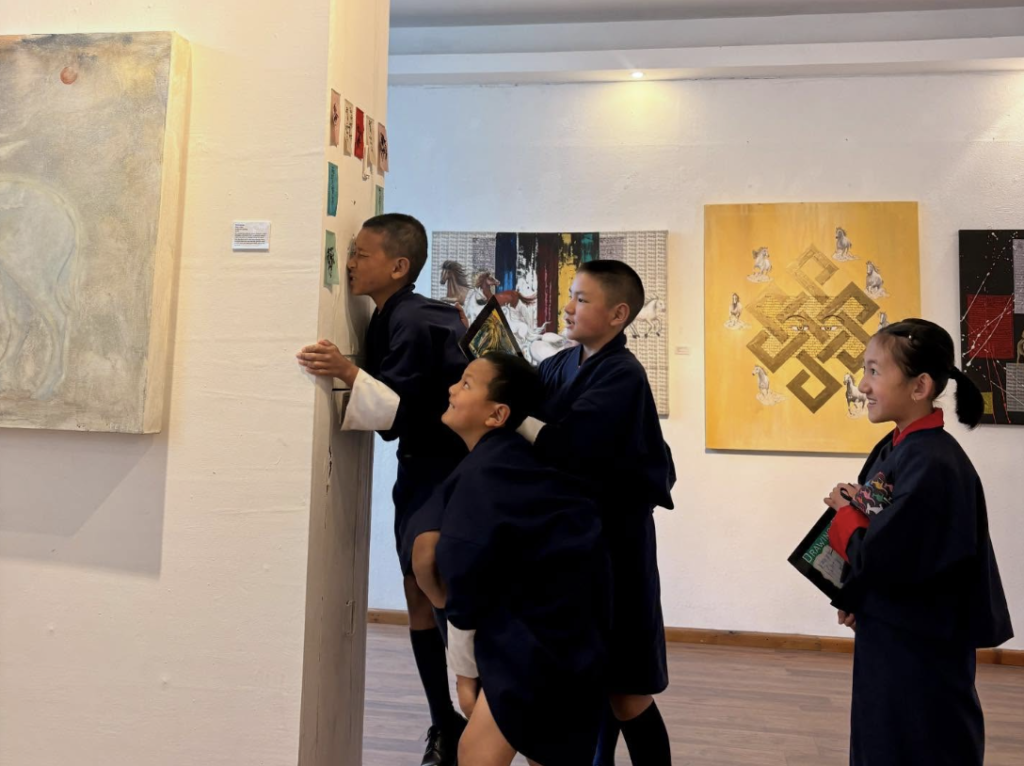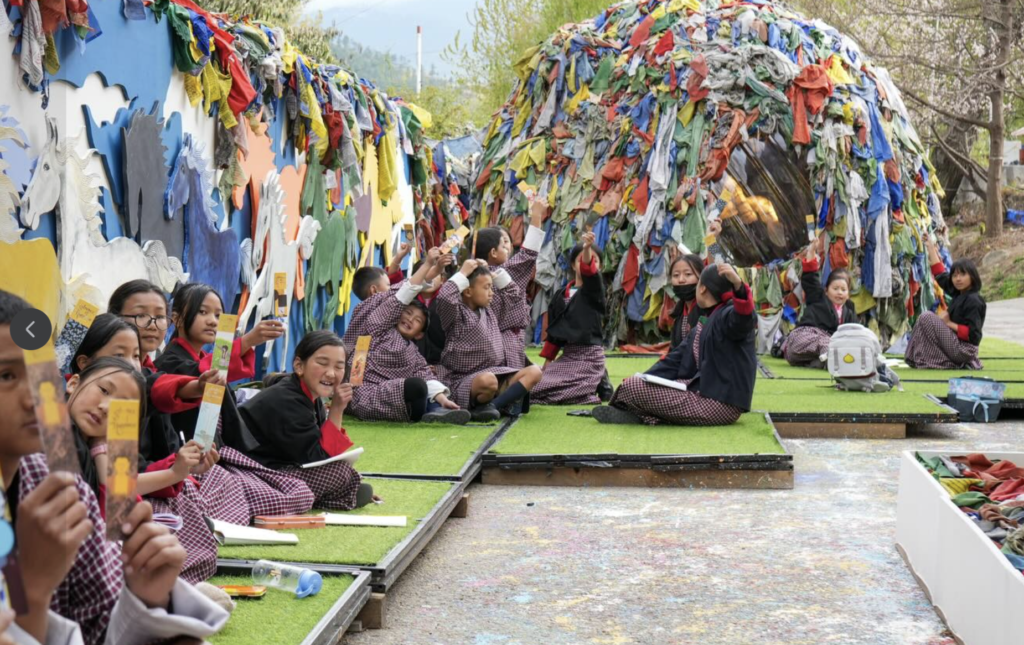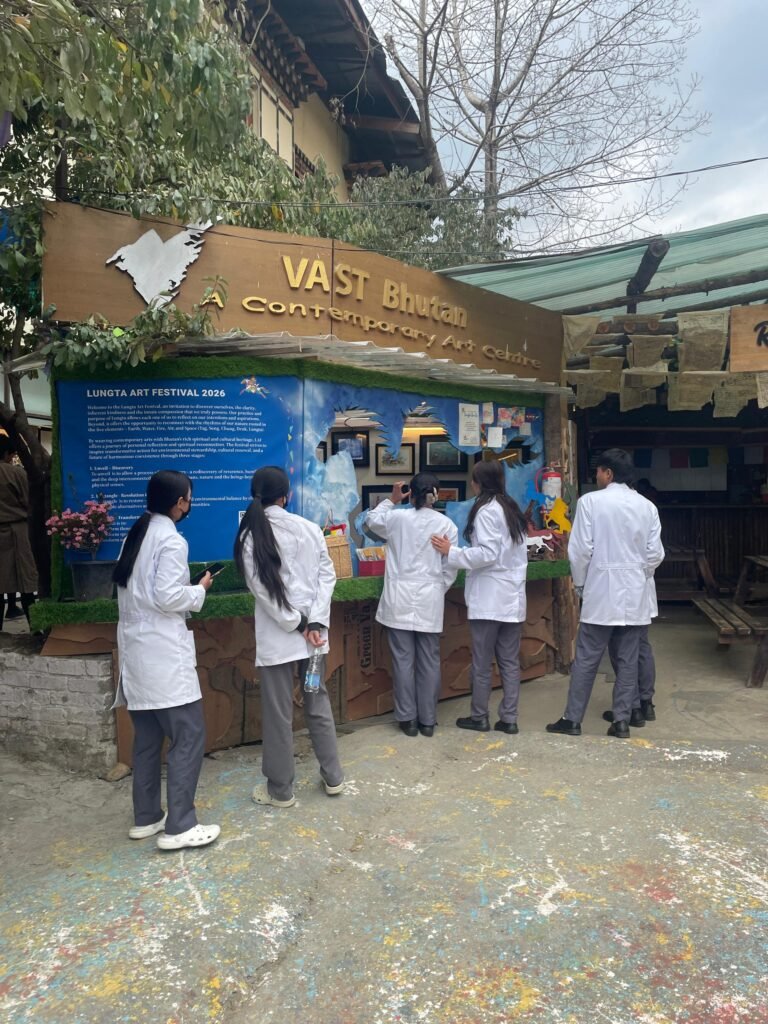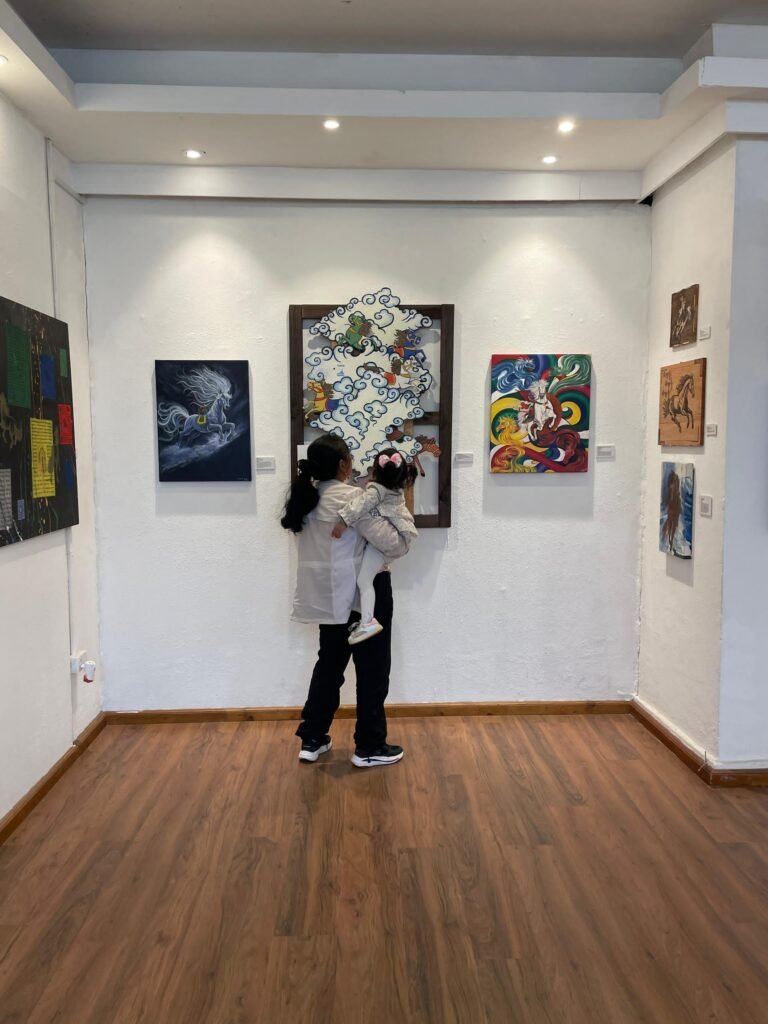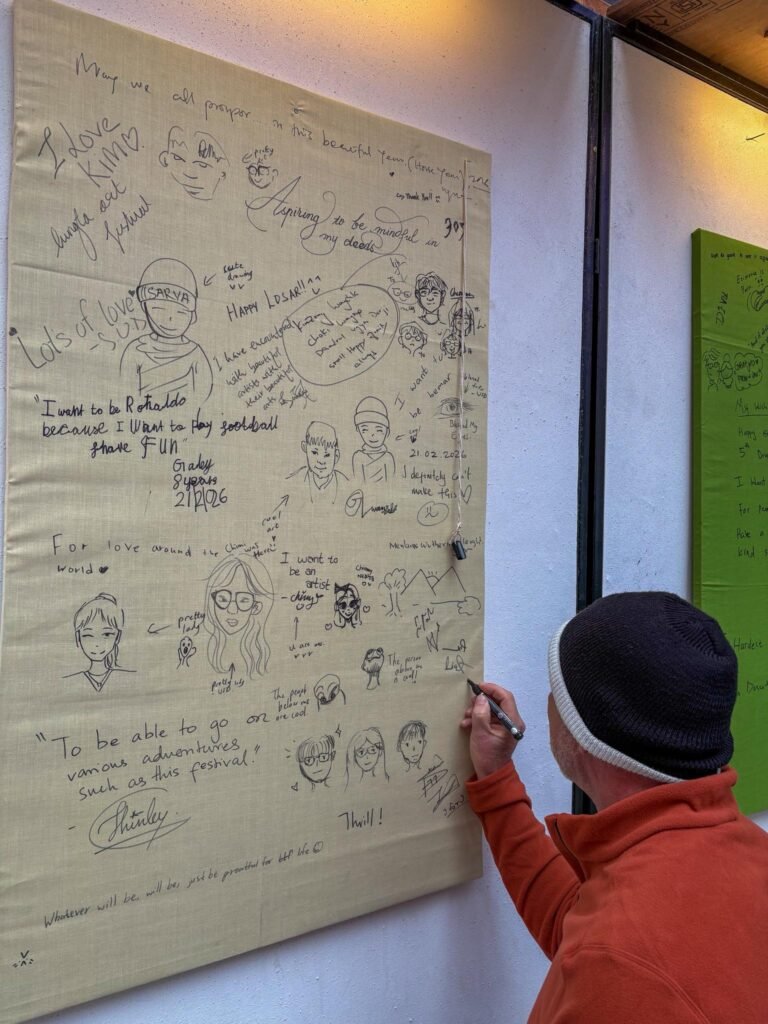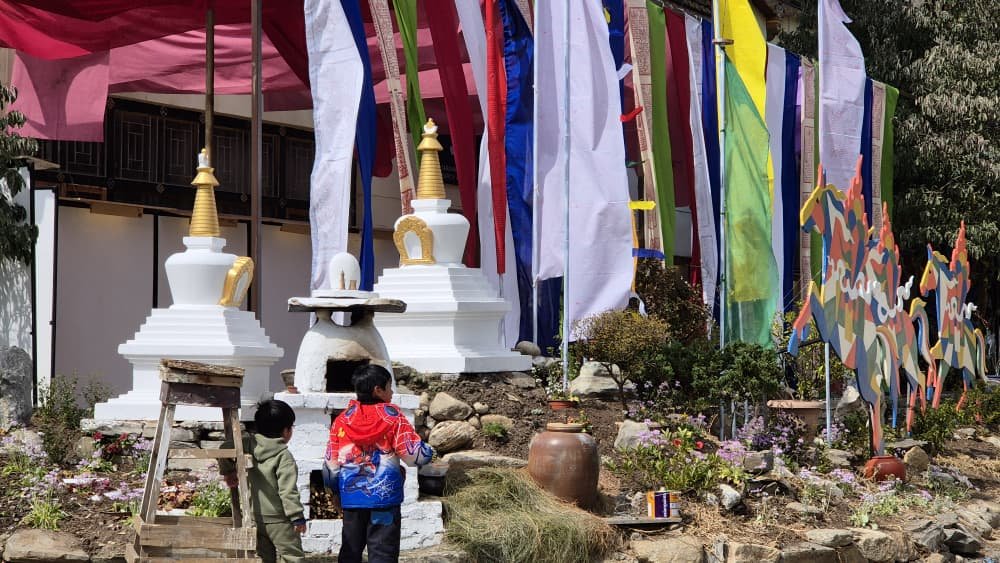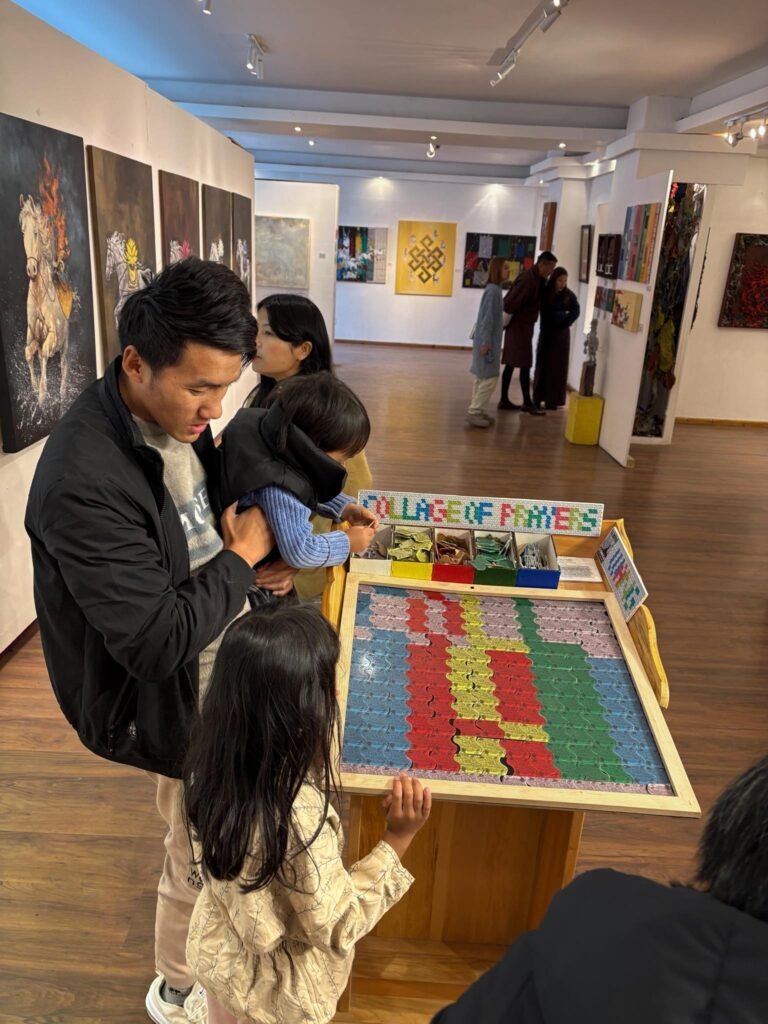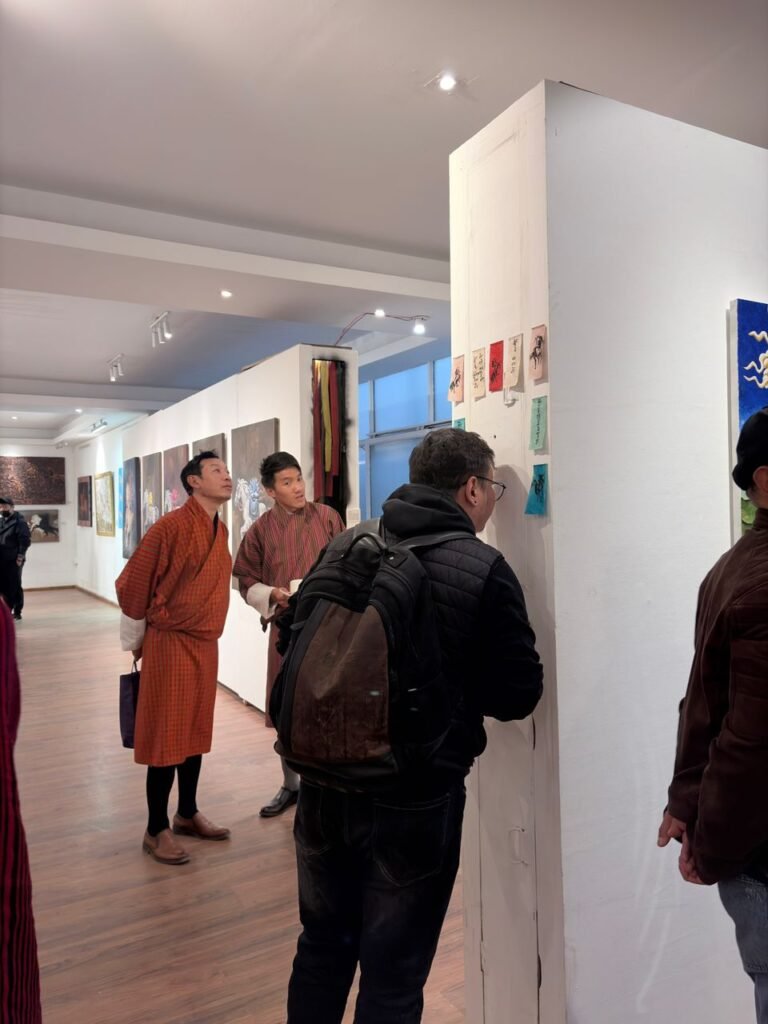
The “Unveil” of the Lungta Festival has become a gathering point for a diverse tapestry of society: toddlers, students, youth, vloggers, tourists, artists, and the public. As visitors begin to understand the underlying intention of the festival, deep and insightful conversations naturally emerge.
Many visitors return, standing either in reflective silence or becoming the guide to people they bring. As the visitors stand across the paintings and the installations, we allow them the space and time to just be. A recurring theme in these interactions is a growing murmur regarding the materials used in traditional prayer flags. There is a sense of “environmental guilt”—a realization that the casual buy of synthetic flags and daily commodities has consequences in our daily lives, our highlands and wildlife. By acknowledging the impact of polyester and plastics, we are exploring alternatives in this age of AI, fast fashion, and convenience.
We are seeing the conversation is beyond art, it is about the intentional balance between honoring our heritage, tradition, practice and making conscious choices in this fast-paced production era. These dialogues are happening beyond the festival space as visitors share their thought on their personal blogs, social media posts, vlogs and text messages.
For some, the journey to “unveil” begins and for some a deeper reflection. Art has always been the medium to tell stories, preserve culture and honor tradition. Elders and individuals visiting the exhibition have are sharing stories of the times when the process of printing prayer flags at home was inherently circular.
“Then, we used to borrow prayer blocks from the Lhakhangs and print the prayer flags on cotton. It was a very natural practice, and now we are here buying [synthetic versions].Time to reflect on my own choices”
The “Unveil” is a continues process encouraging us to look within.
Jigme Losel students spend the afternoon drawingKids enjoy the lungta blocks Installation to tall for us, friends offer a liftJigme Namgyal students enjoying the festival and happy with their bookmarks. Taking a break from work Spin me gently – an interactive lungta installation
The Lungta Art Festival presented the Innovative Xylographic Woodblock Workshop with the following objectives:
To revive and advocate for traditional xylographic woodblock printing techniques.
To explore innovative, contemporary applications for these traditional methods.
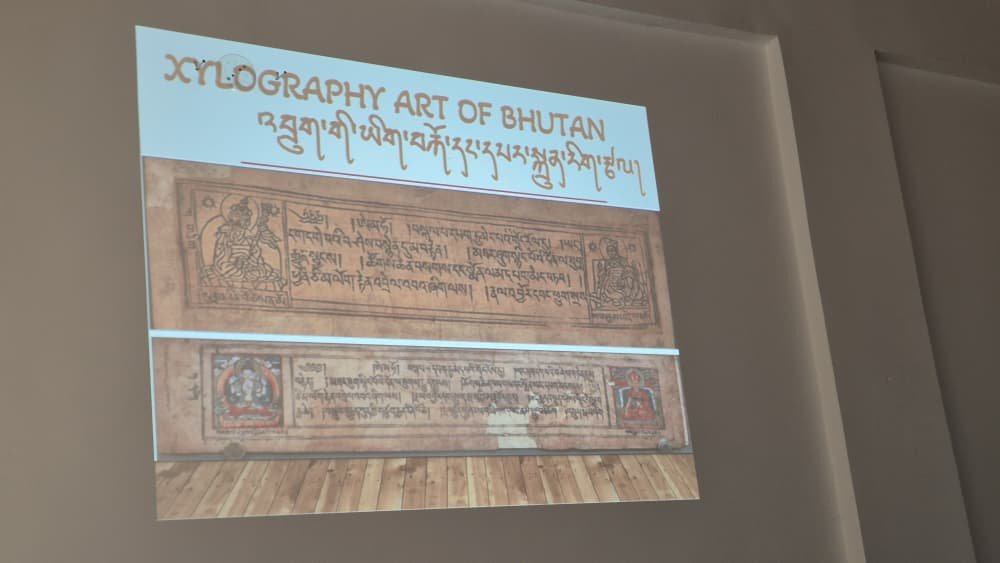
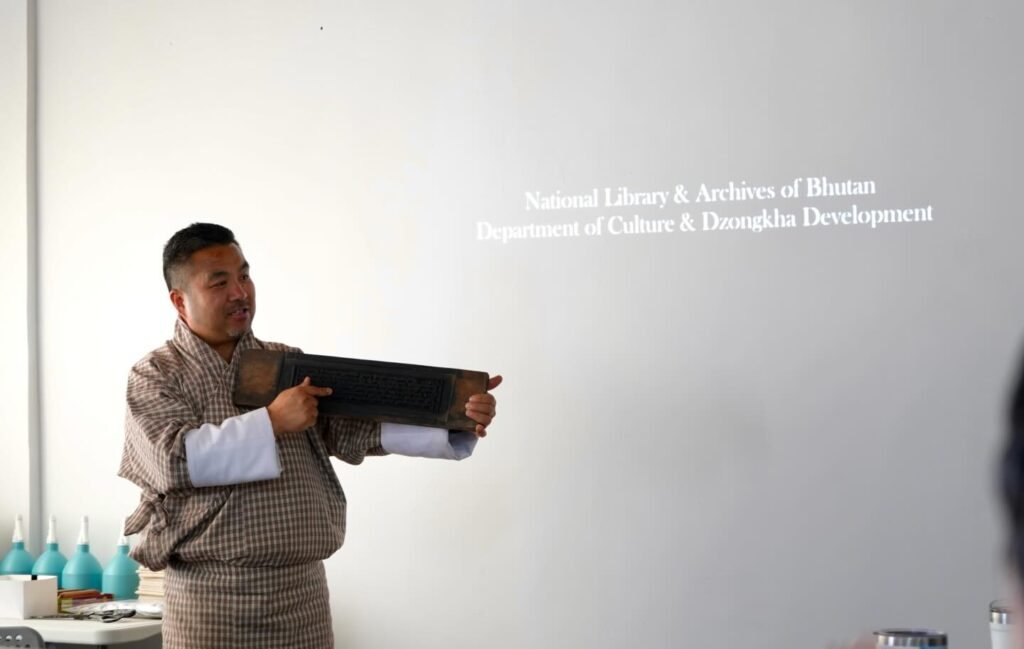
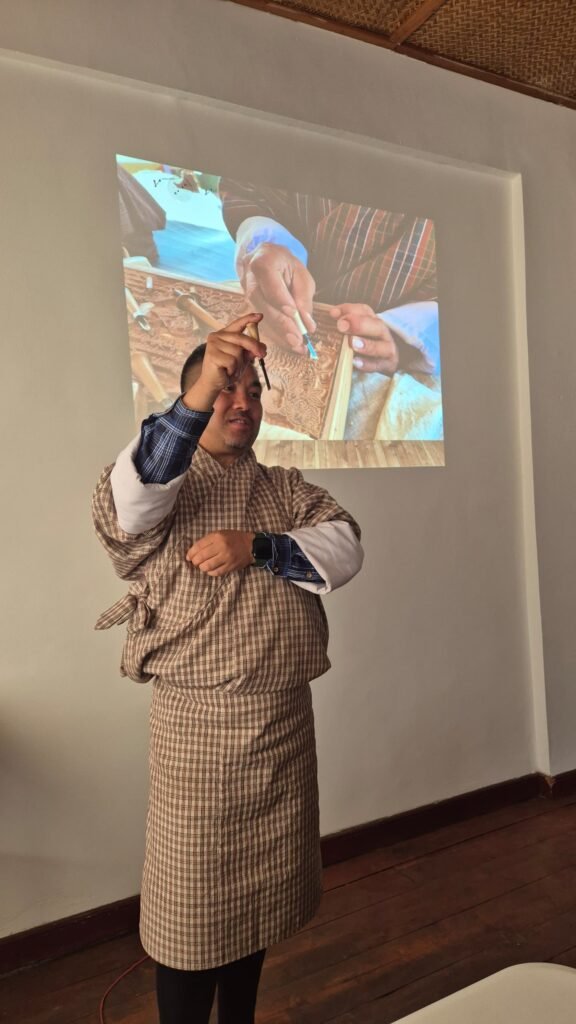
Unveiling the Lungta has brought us to the immense wealth of xylographic art and wood block printing in Bhutan. Unfortunately, the practice is not as vibrant now. Recognizing the value of the practice, the art and need to preserve, VAST Bhutan, in collaboration with the Department of Culture and Dzongkha Development, Ministry of Home Affairs, hosted a three-day intensive workshop. The program was led by Senior Librarian Yeshi Lhendup and Artisan Phub Thinley.
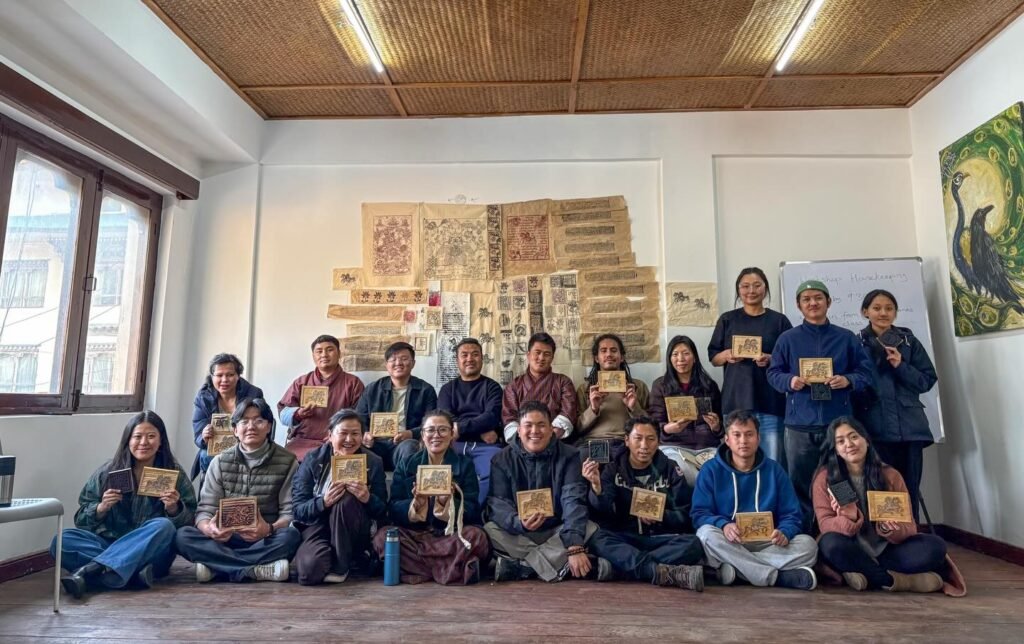
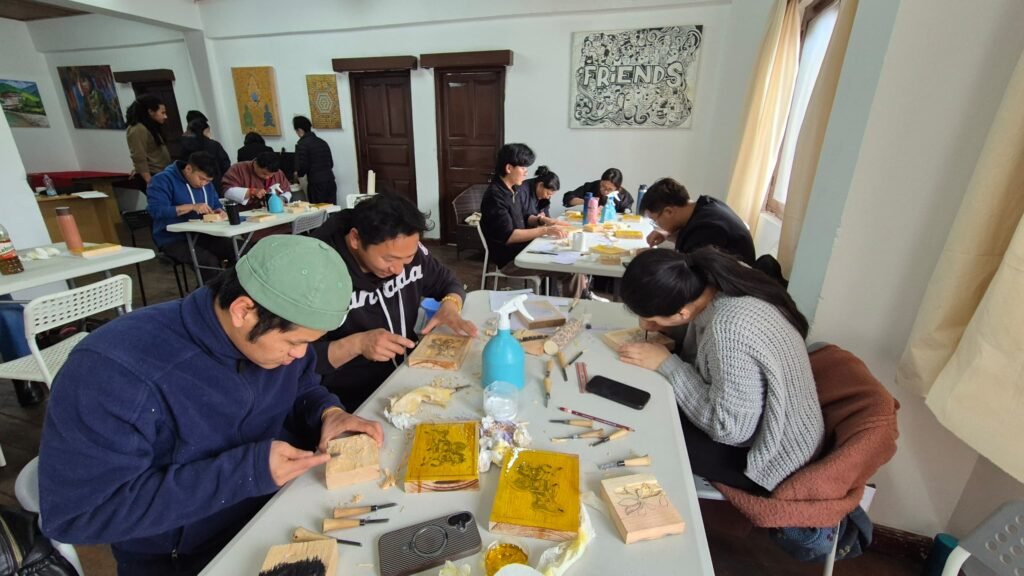
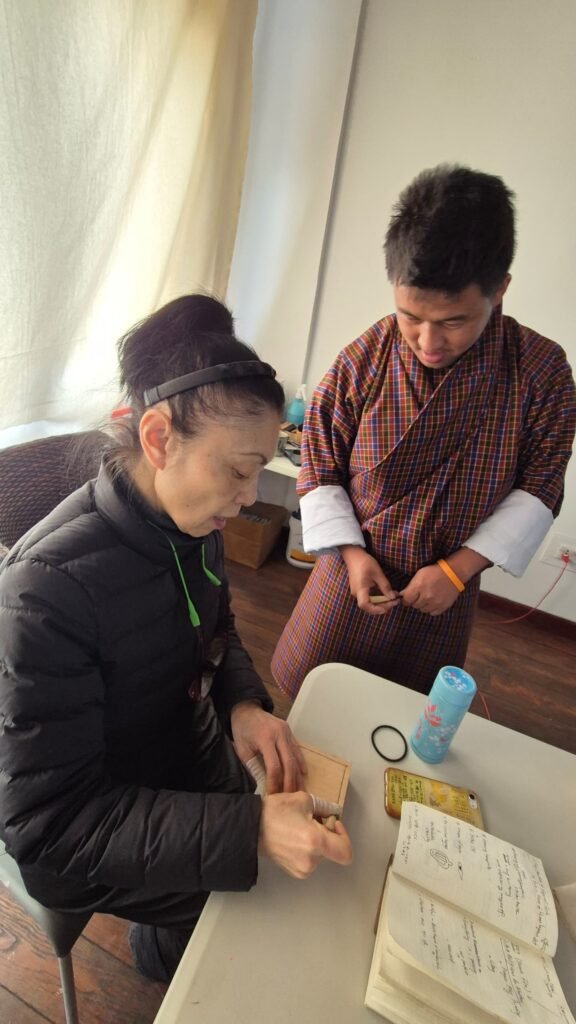
The workshop had 19 participants—ranging from professional artists to adult learners— experiencing and learning the foundational tools and techniques of traditional xylography.
The workshop was designed as an interactive process rather than a standard technical class. It introduced participants to Bhutan’s conservation efforts regarding ancient Buddhist scriptures and woodblock prints, such as the Lungta and namthars of great master. Every step of the process was demonstrated, supported by videos and photos to show the care required at each stage. The whole process does require one’s full focus as shared by a participant “The whole process demands attention and care to detail. I felt it is a mindfulness process, I had to stop to talk because I was worried, I would make a mistake. I really focused.” Jigme, participant
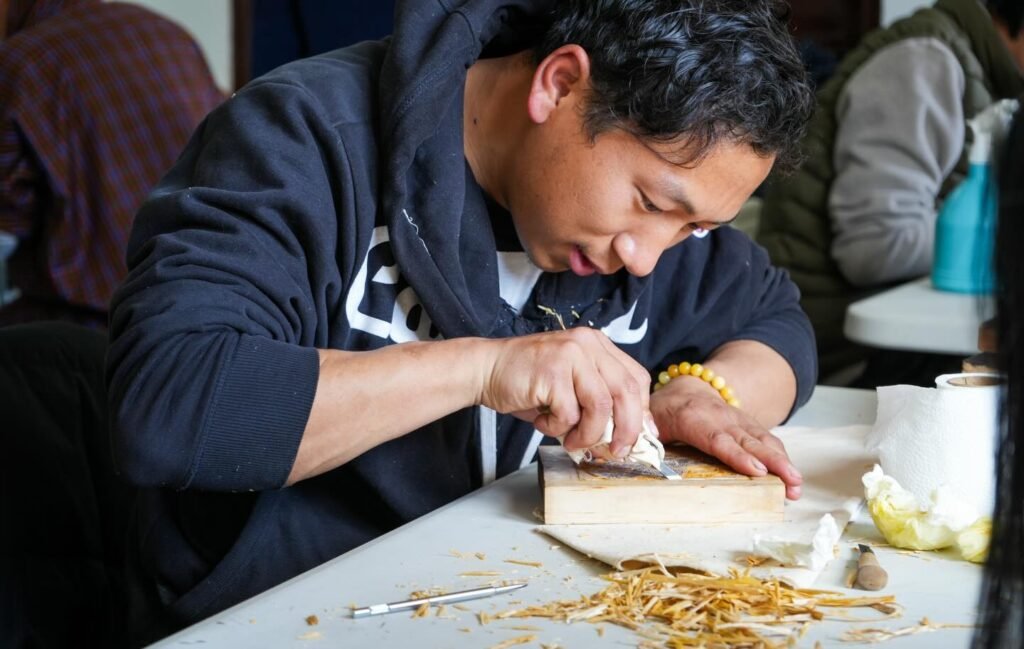
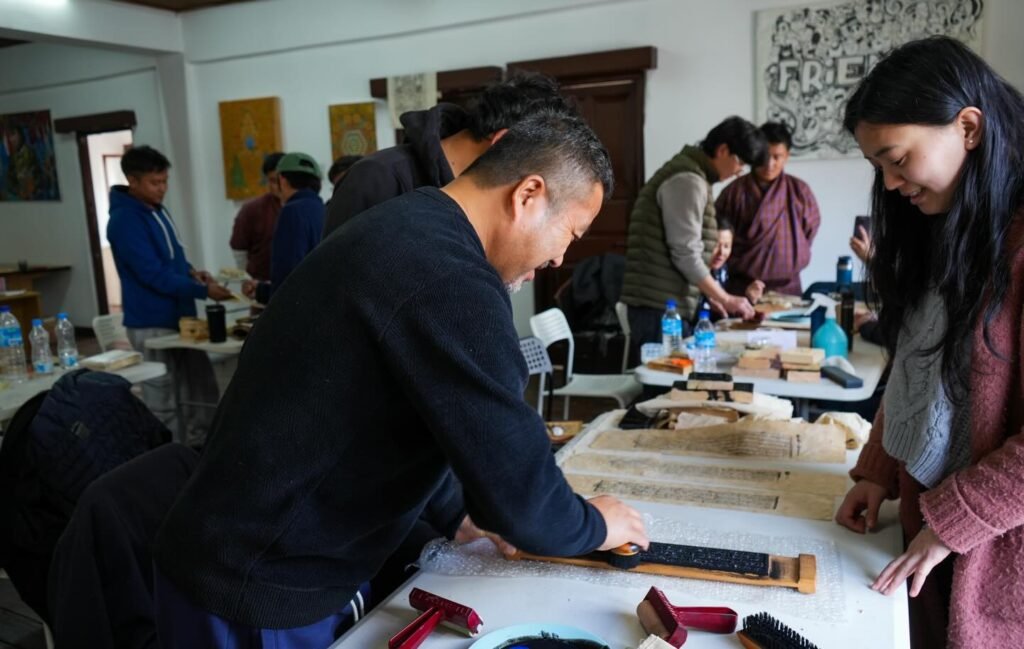
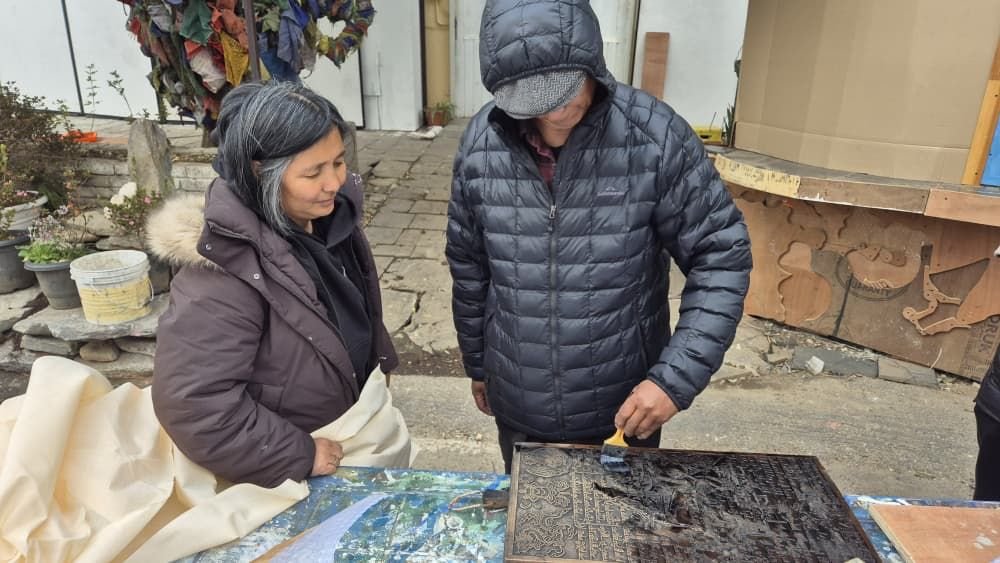
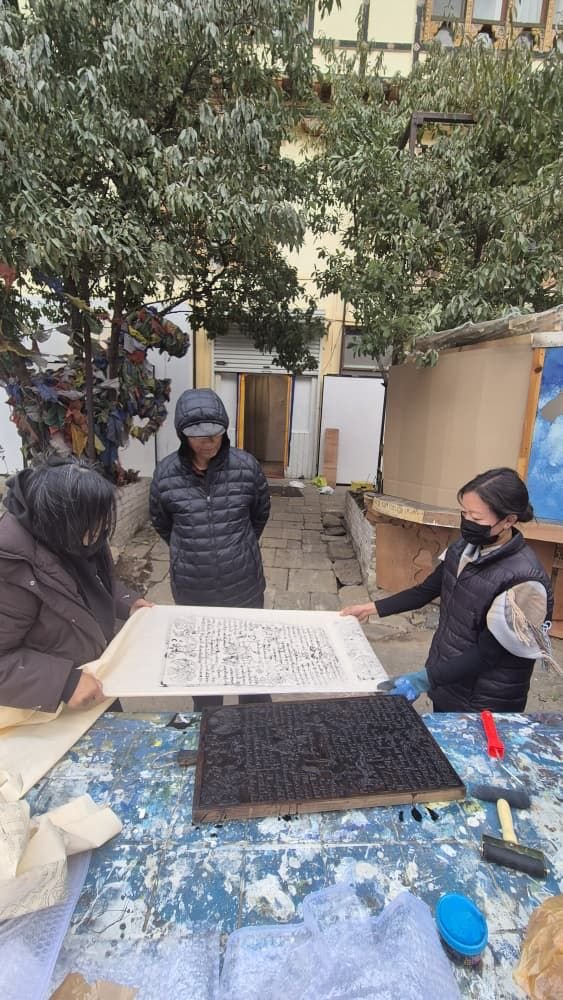
Through hands-on production, participants carved Lungta onto woodblocks. They experienced the physical demands of the craft: the tension in the fingers, the precision of the cuts, and the deep focus required to navigate intricate designs. They also engaged in woodblock printing using natural dye on paper, this gave the participants a different experience from carving. The two experiences were rich in both their respective forms. This immersion fostered a profound respect for the traditional arts and crafts of Bhutan. Participants learned that in this digital age, the traditional practices are at a critical juncture, and their realization shifted from observer to custodianship. As we embrace digital transformation, preserving culture and tradition are non-negotiable. Therefore, this workshop is only the start as Yeshi Lhendup noted:
“We have conducted workshops on xylography with others; however, this is our first collaboration with VAST Bhutan. The invitation to conduct this for artists and adult learners is the first of its kind. We have not seen such an enthusiastic group with such artistic skills, we are .”
VAST Bhutan would like to express our gratitude to the Department of Culture and Dzongkha Development, Ministry of Home Affairs for their support.
A successful workshop, behind the smiles of the participants are numb fingers. Safety tips and the correct way to hold and handle the tools
Dorji all smiles, learned the correct way to carve Sir Yeshi Lhendup guiding the participants on the process of woodblock printing No time to waste, concentrate and carvePhub Thinley guides the first step – holding the tool
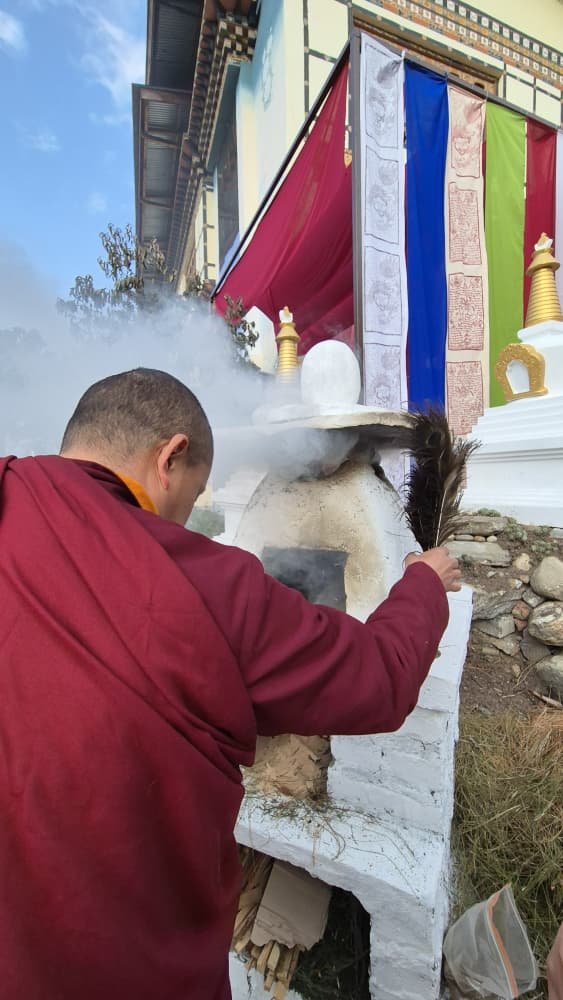
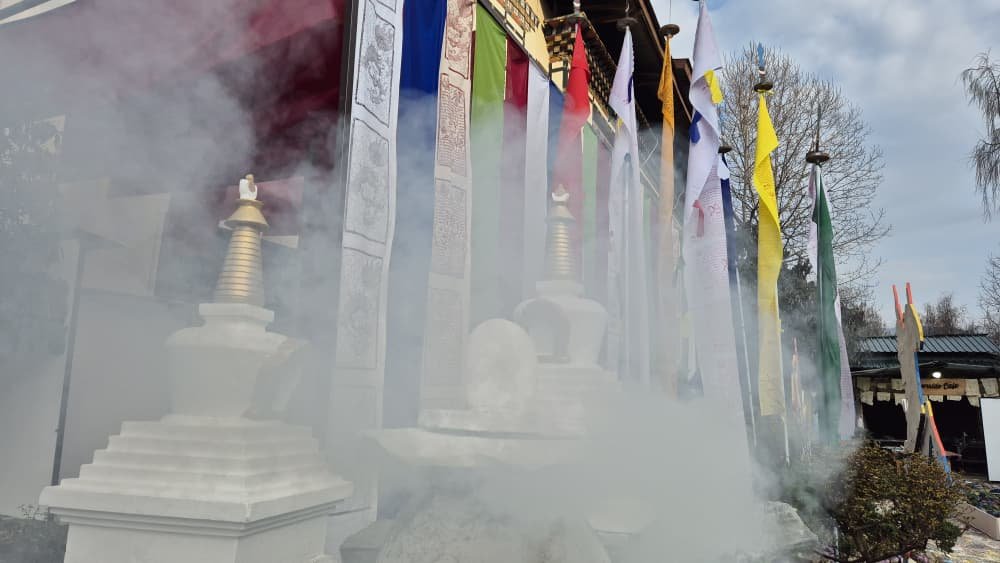
On 21st February at 6:00 AM, the sacred sounds of prayer marked the beginning of the Lungta Art Festival. Monks from Pangrizampa Monastery commenced the day with prayers, accompanied by the melodious sound of the of drilbu and drums. We joined the nation in offering our prayers for the long life of His Majesty The King.
The launch was more than an inauguration — it was a moenlam, a collective aspiration. The year-long Lungta Art Festival celebrates the goodness inherent in all of us. Curated through a contemplative approach, the festival offers a serene and reflective space where art becomes a bridge between the spiritual, social, and environmental dimensions of our lives. Rooted in the symbolism of Lungta — the Wind Horse that carries prayers and aspirations — the festival invites deeper reflection on intention, action, and responsibility.
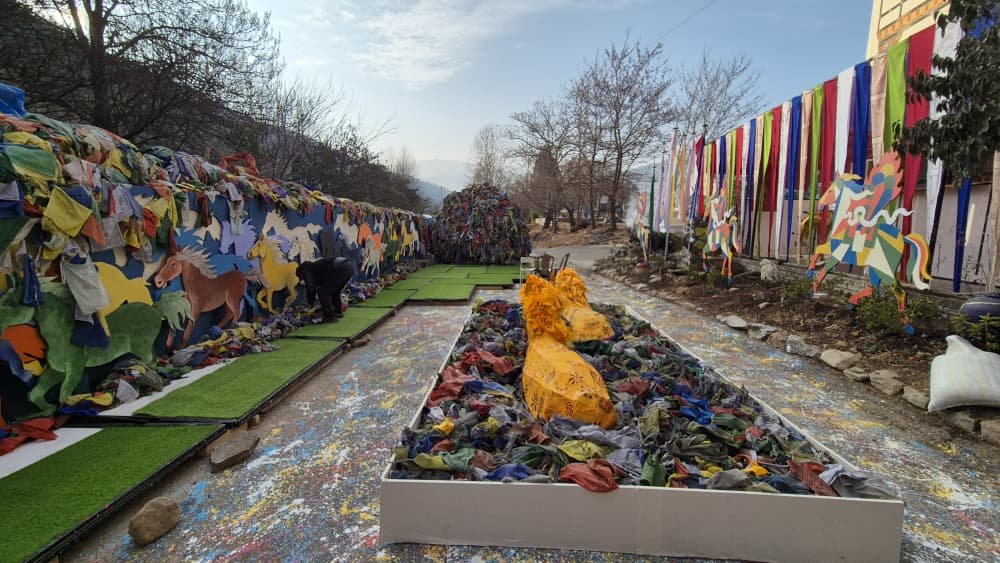
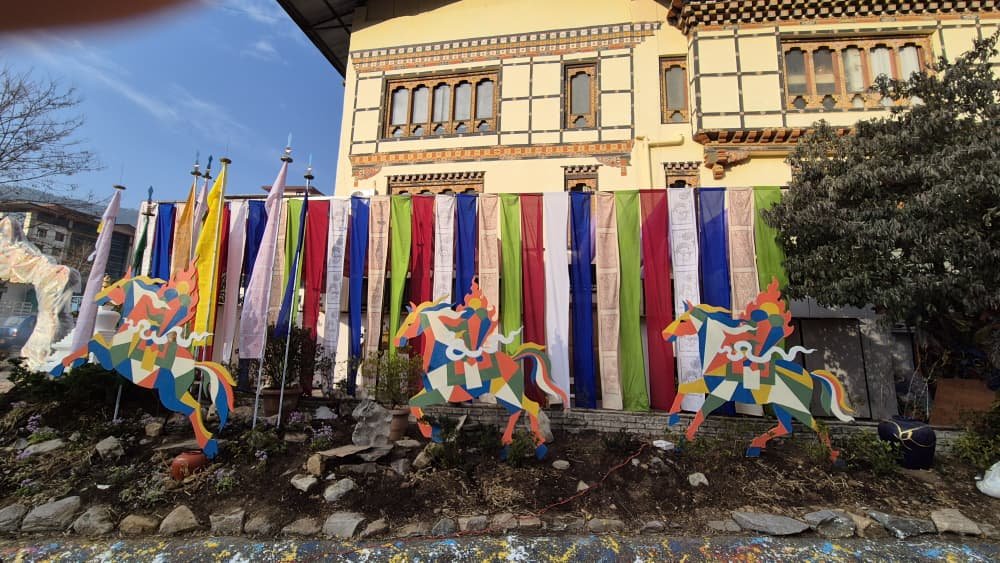
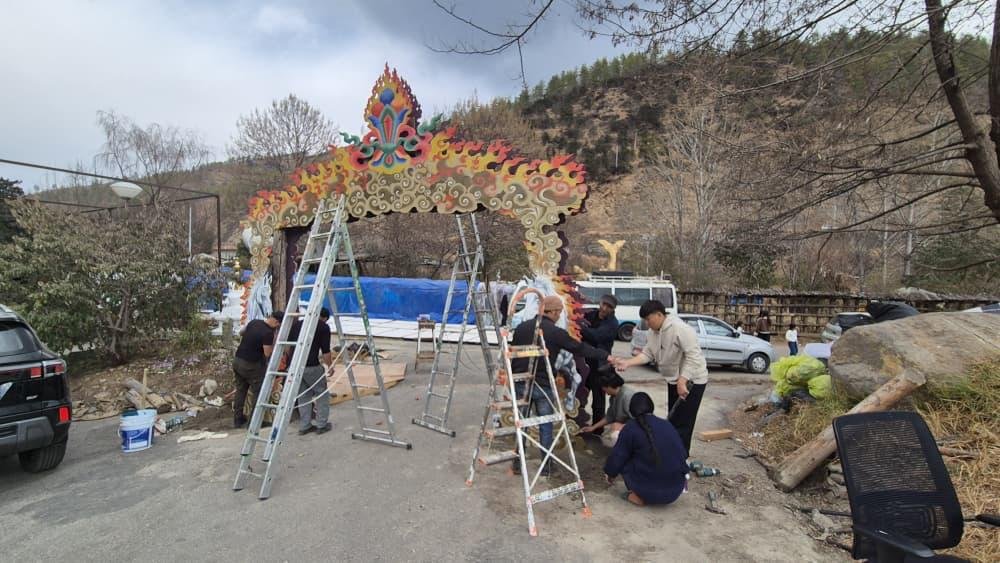
By 5:00 PM on the launch day, guests began arriving mesmerised by the grandeur of the gate designed just for the festival. The gathering grew into an inspiring and diverse crowd, representing all age groups, with young people forming the largest group of participants. Visitors engaged with 140 artworks presented by 60 artists, each contributing to a shared dialogue on culture, spirituality, and ecological consciousness.
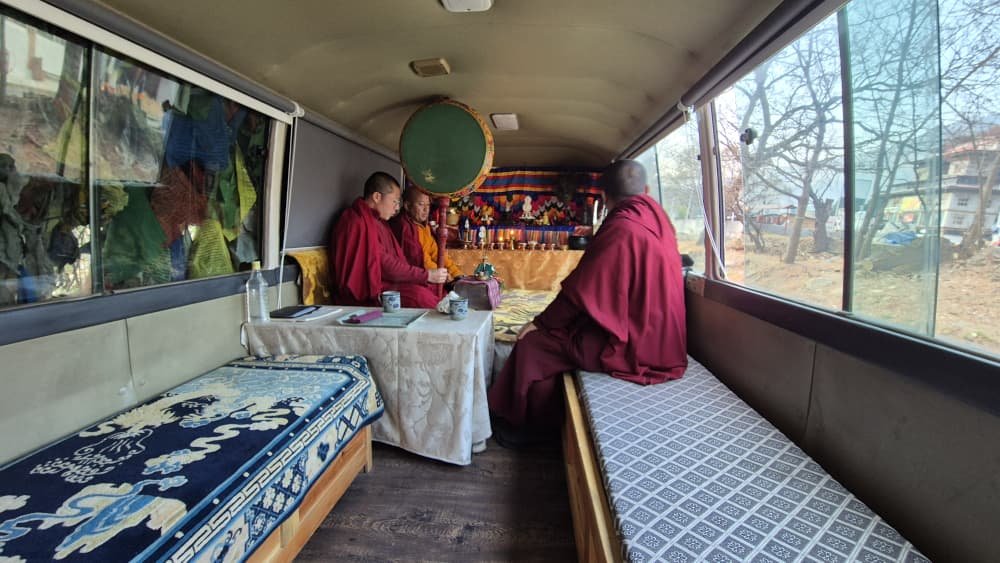
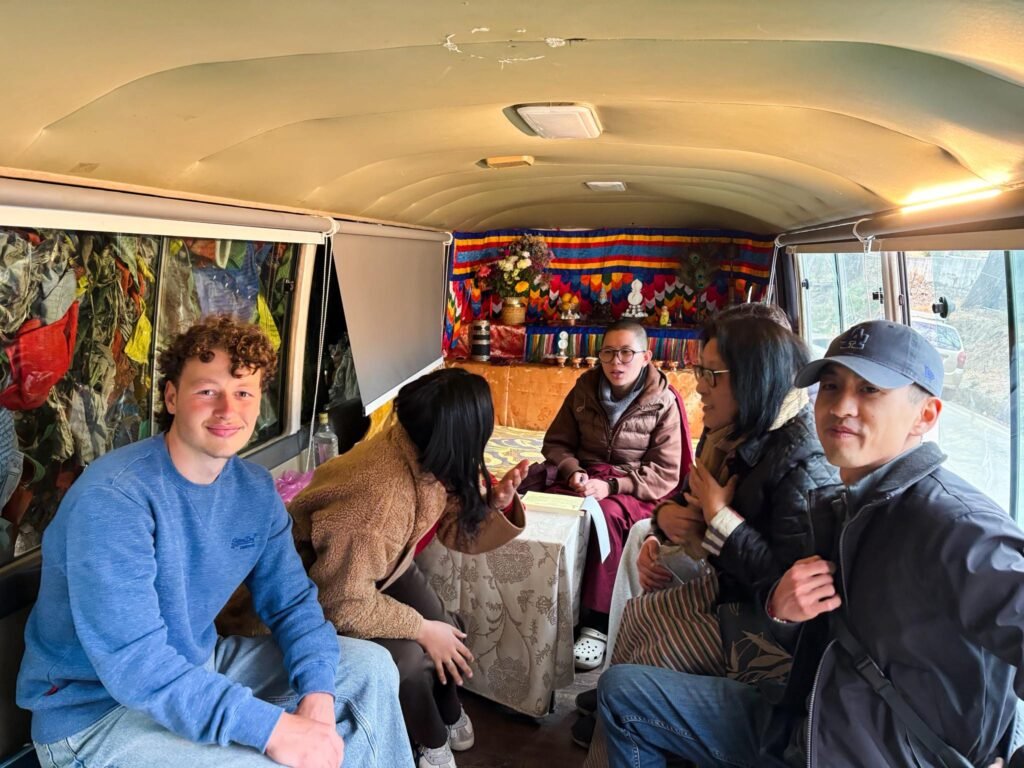
The festival features multiple engagement spaces designed to encourage participation and reflection. Some visitors paused at the entrance, looking at the lungta and the details of the installation. Others were drawn to the “Lungta Saa” (Lungta recitation) bus, immersing themselves in the experience of collective prayer. Many explored the installations, paintings, and interactive spaces that invited both admiration and active participation.
“There is so much to experience — from paintings to spaces where I can participate. This is a wonderful exhibition.” Guest
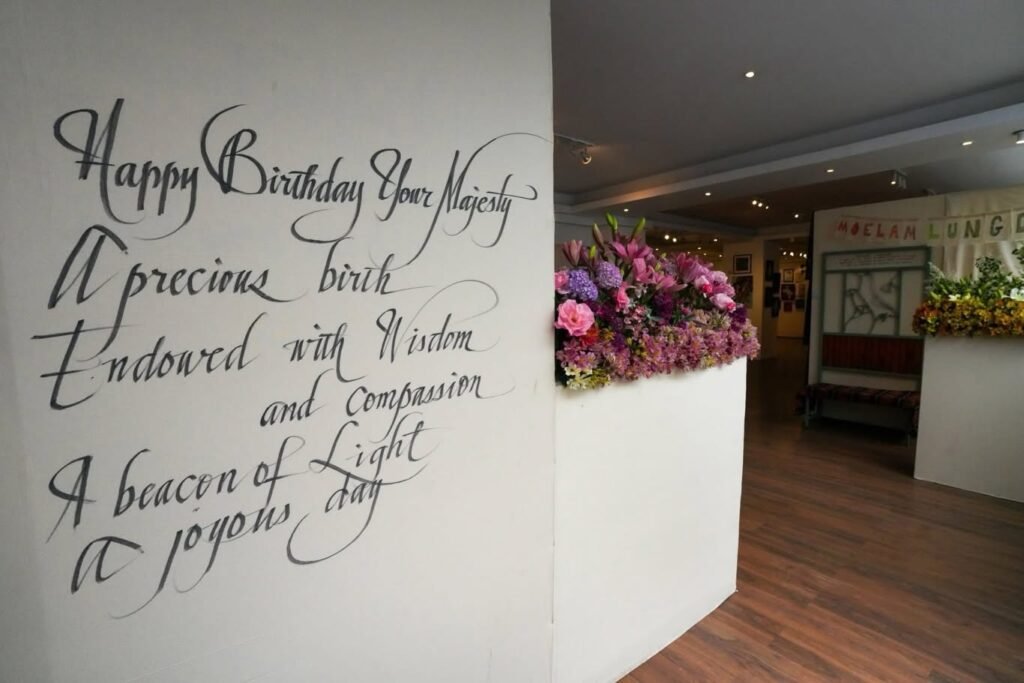
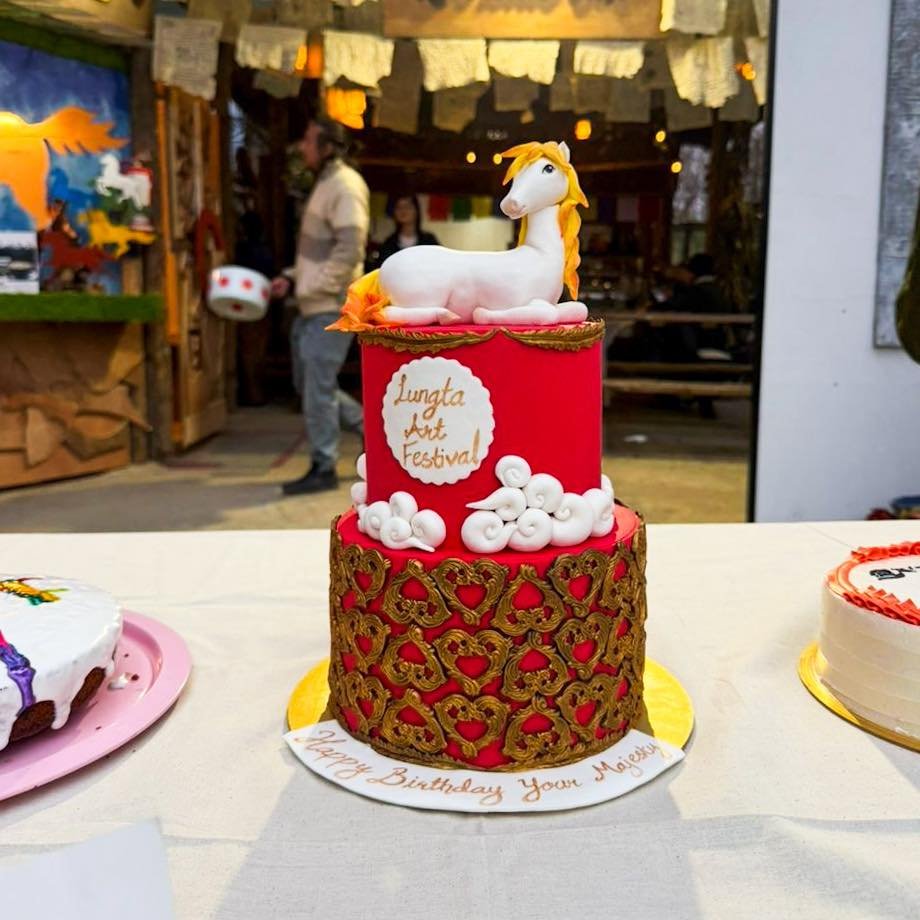
In a moving moment of unity, guests joined together to offer a birthday song to His Majesty The King and prayed for the fulfillment of His Majesty’s aspirations for the nation.
The Voluntary Artists’ Studio Thimphu (VAST) team shared the objectives of the Lungta Art Festival:
To promote the interconnectedness of social, cultural, and spiritual values for societal growth, peace, and harmony.
To create awareness and encourage environmental stewardship in our fragile mountain ecosystems.
To foster positive social and behavioral change through a shared, transformative process of community engagement.
The Lungta Art Festival is beyond an exhibition — it is a year-long journey of contemplation, dialogue, and collective awakening. Through art, prayer, and shared participation, it is a reminder to each one of us to reflect on the aspirations we raise into the wind and the responsibilities we hold on the ground.
For many visitors, the experience was both eye-opening and deeply reflective:
“I did not know what the festival would really mean, but in the last few hours, I learned so much about Lungta. I have never thought deeply about the polyester, or about the true practice of impermanence. This is amazing.” Visitor at the launch
As the Wind Horse rises, may our intentions be carried with wisdom, compassion, and care for the world we share.
The festival is open to everyone and free of charge throughout the year, welcoming all members of the public to engage, reflect, and participate.
The inaugural exhibition, Unveil, will run until the end of March and is open daily from 11:00 AM to 6:00 PM, except on Mondays.
The artist community is grateful to everyone who joined us to celebrate and will join us to celebrate the LAF. The Unveil is supported by a grant from the Rubin Museum of Himalayan Art.
Lhabsang and prayers by the monks from Pangrizamap Sang Offering The sunrise shines on LungtaContemplate and reflect In the Lungta Bus, offering prayersOur most enthusiastic visitorsPuzzle of prayersHappy Birthday Your Majesty Visitors engaging with the art works.
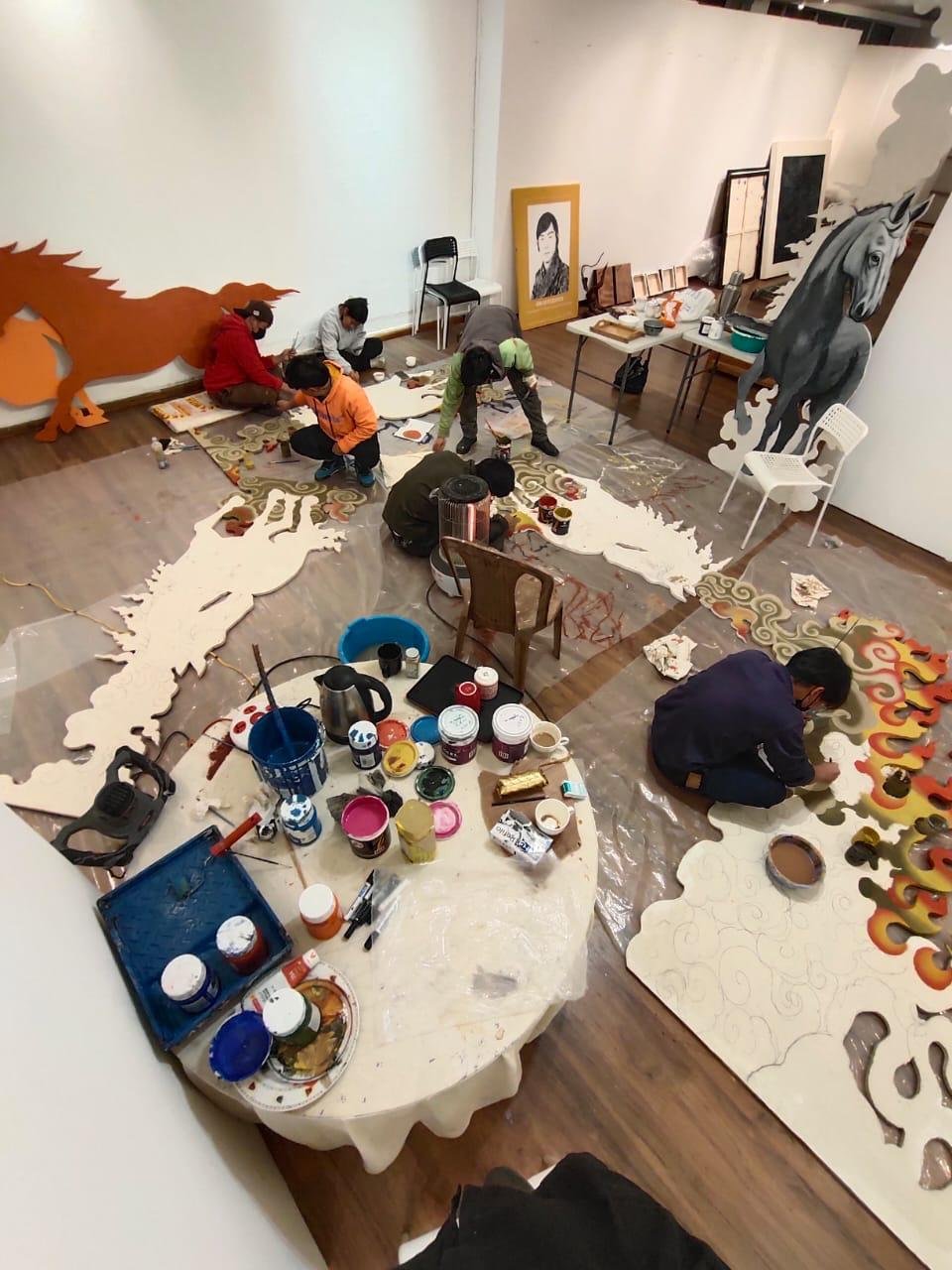
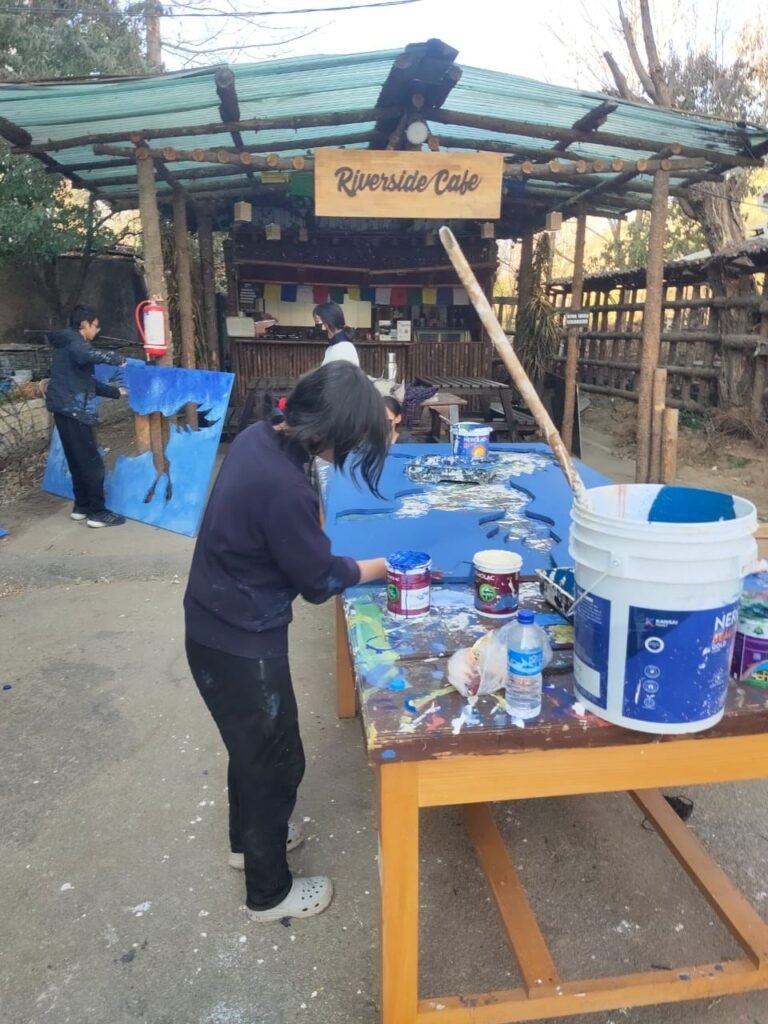
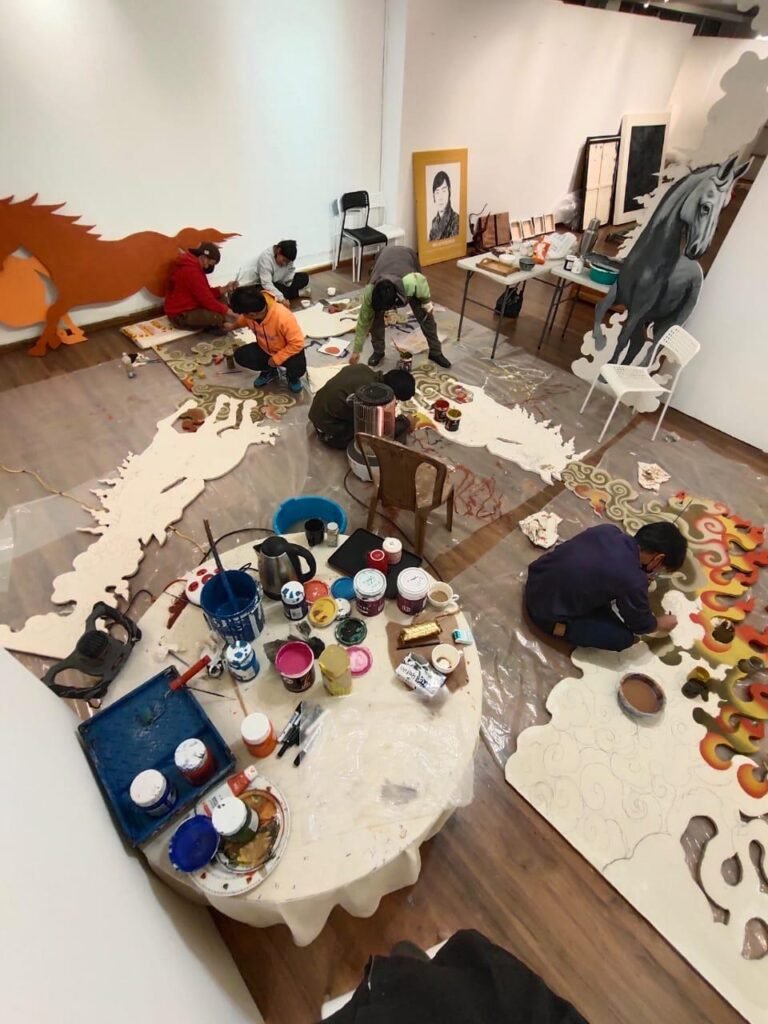
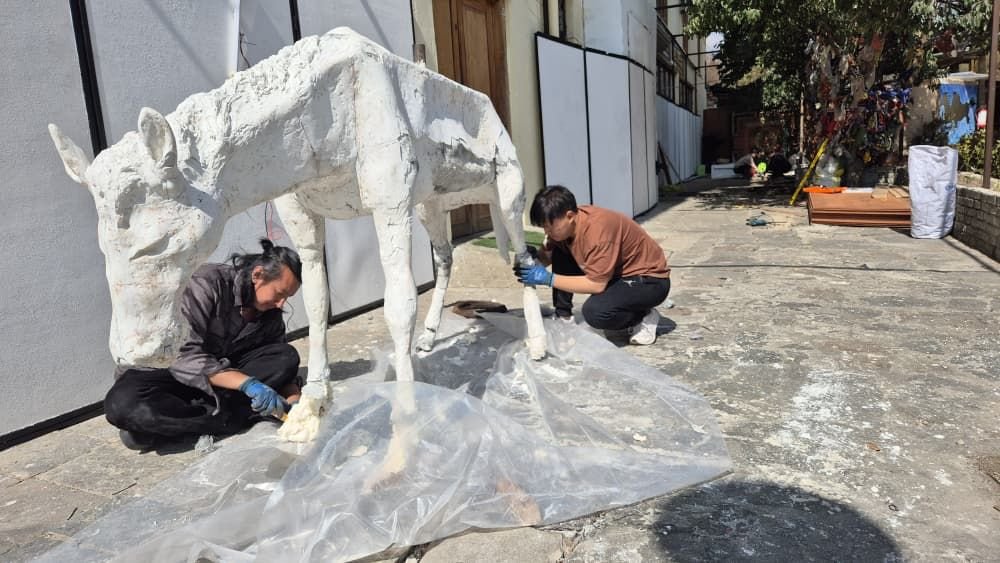
The VAST Bhutan Centre has become a living, breathing landscape of creation. Dressed in long coats, painted shirts, and energy, we are working through mornings and nights with unwavering dedication—and YES a lot of FUN.
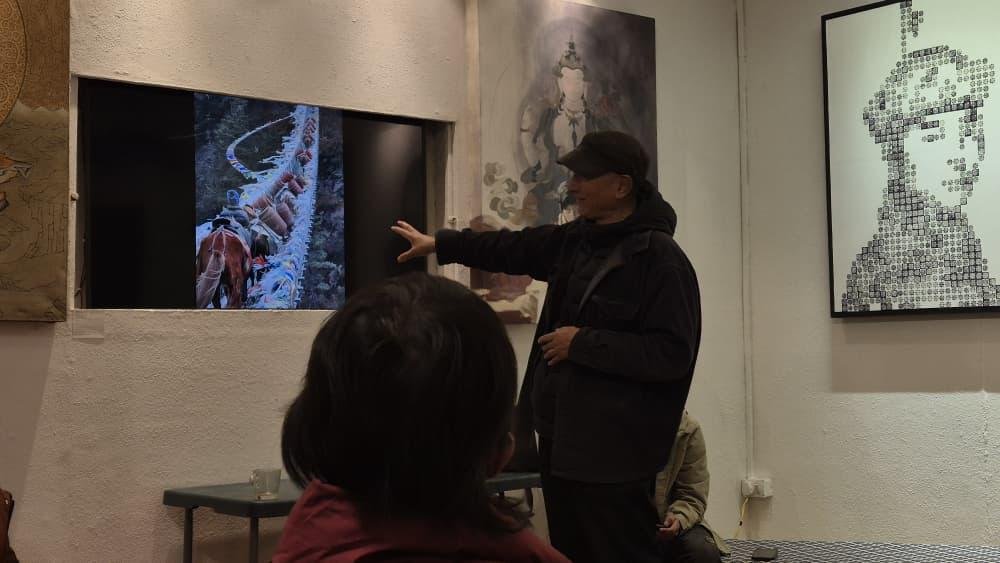
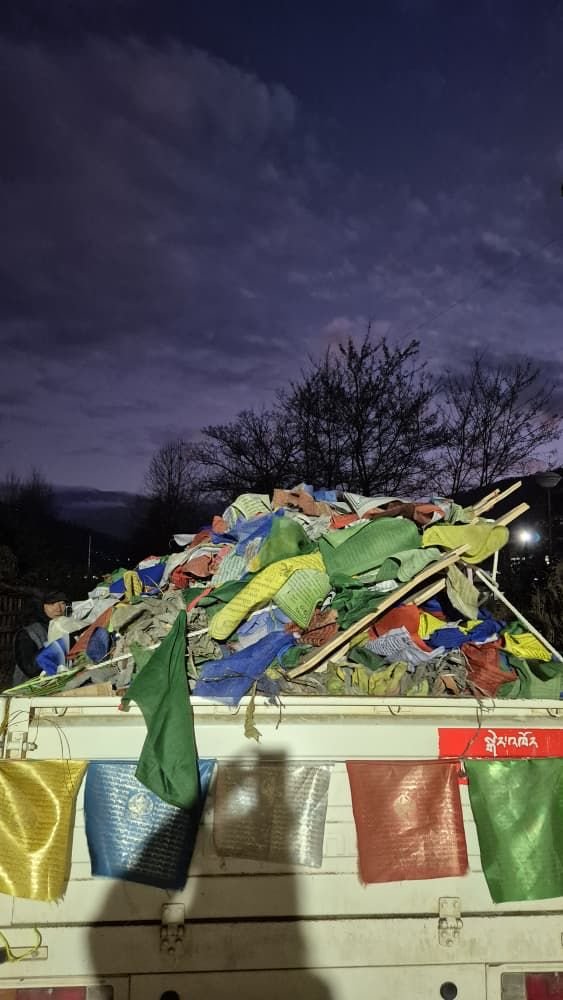
At the center of the magic is Asha, the Festival Director, shuttling between the art shelter in Punakha and Thimphu. When Asha’s bolero arrives, it is loaded with lungta art works and old flags. We unload the flags and then gather to check in on the progress collectively and individually.
Asha opens his “black book” of master plans while excited artists and friends gather around, amused and inspired by the ambitious scale of what we are building together. Every day, the transformation continues.
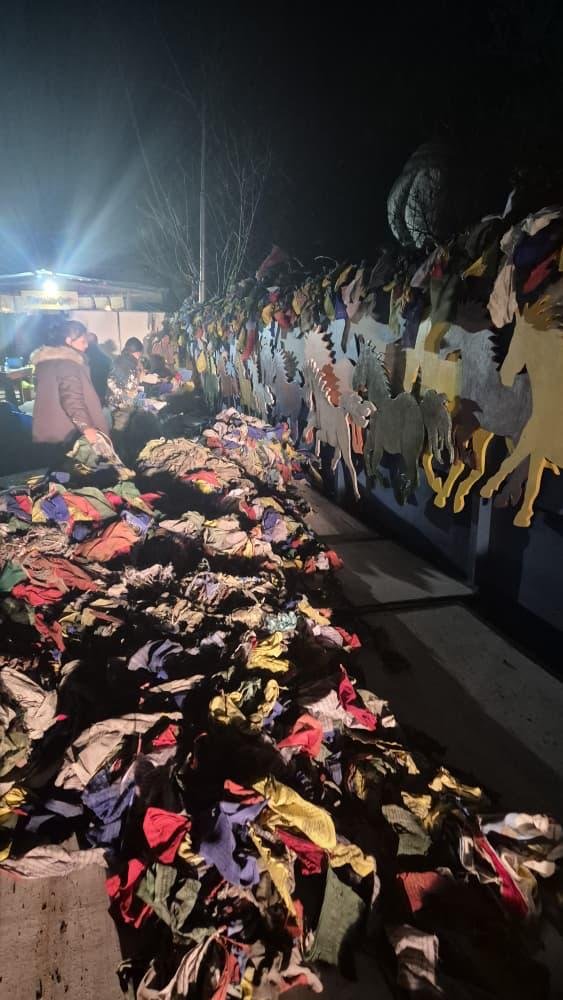
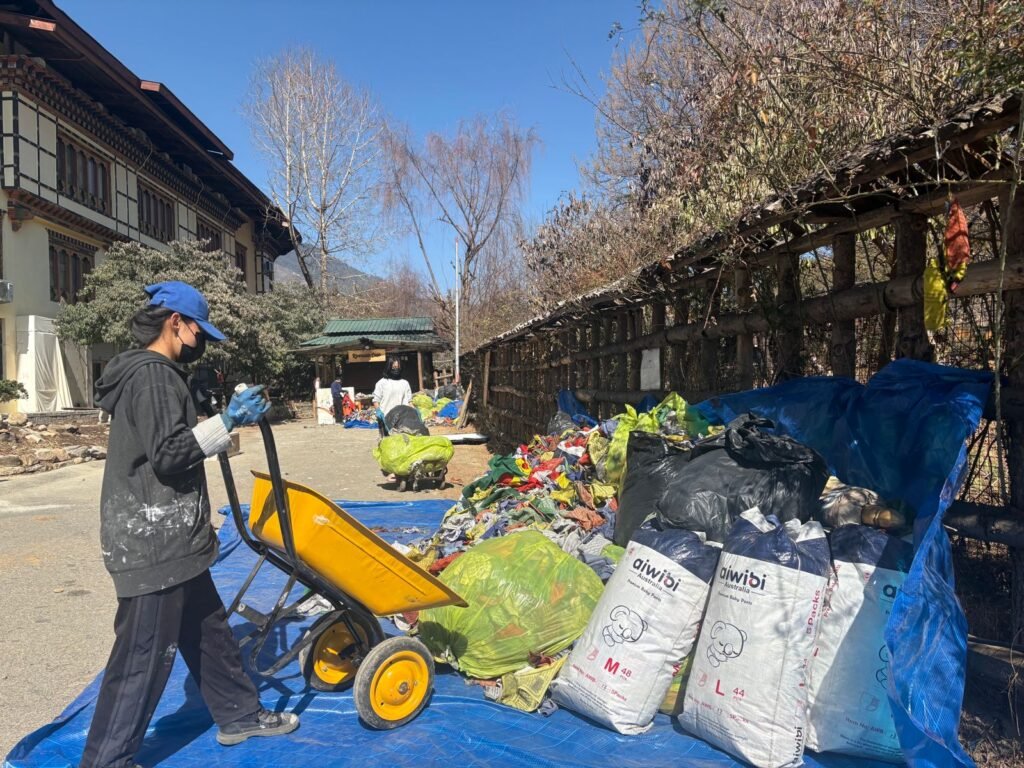
The VAST space is undergoing a total facelift. Amidst the drills, hammers, metals, flowers, sand, soil, brushes and splashing paint, visitors often stop to watch us or stare at heaps of weathered, soiled prayer flags. While some might see just a heap of old flags, to us, these old flags are our treasure and the heart of the festival. Artists are constantly testing the limits of wood, metal, ink, and fabric, finding a place for every idea. The heaps of old prayer flags are addressing a call to action.
Friends drop by to lend a hand, bringing tea, food, and treats and join the spirit of the collective. We tell our friends; your treat is an act of “Lungta Sa.” These gatherings have sparked a vital dialogue: discussing biodegradable materials for prayer flags, reusable cutleries, and sustainable actions that honor our spirituality and our environment.
As the launch approaches, the “noise” of hammering, drills and the like has turned into a symphony of joy. As the artists come to submit their artworks, they are surprised to see how the space has shifted from a workshop into a sacred site of spiritual and ecological renewal.
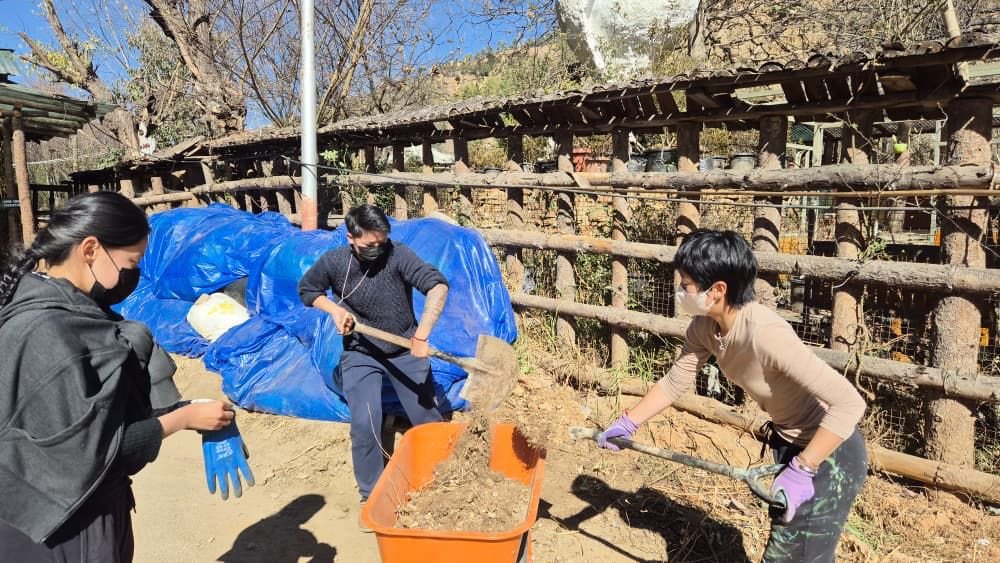
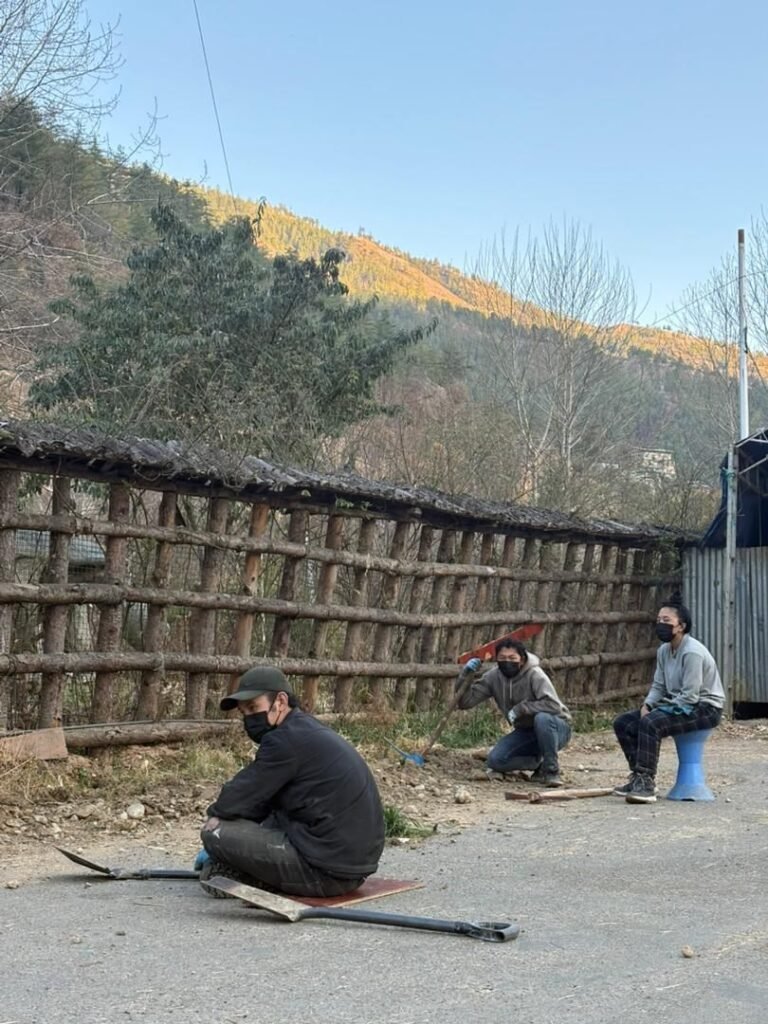
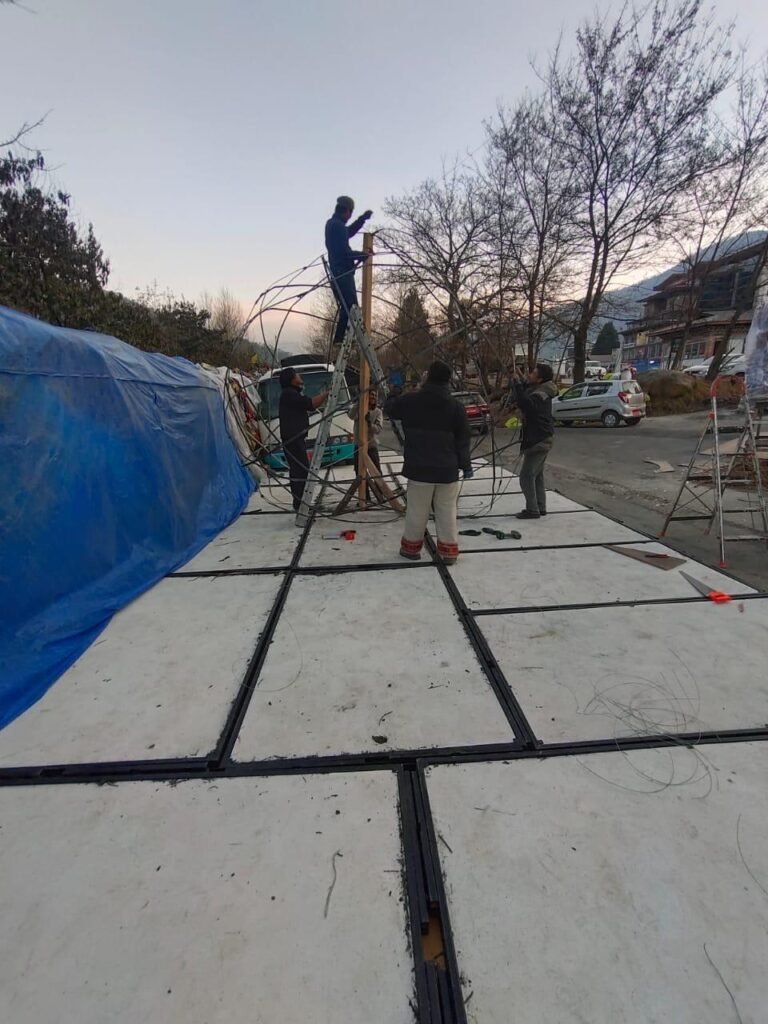
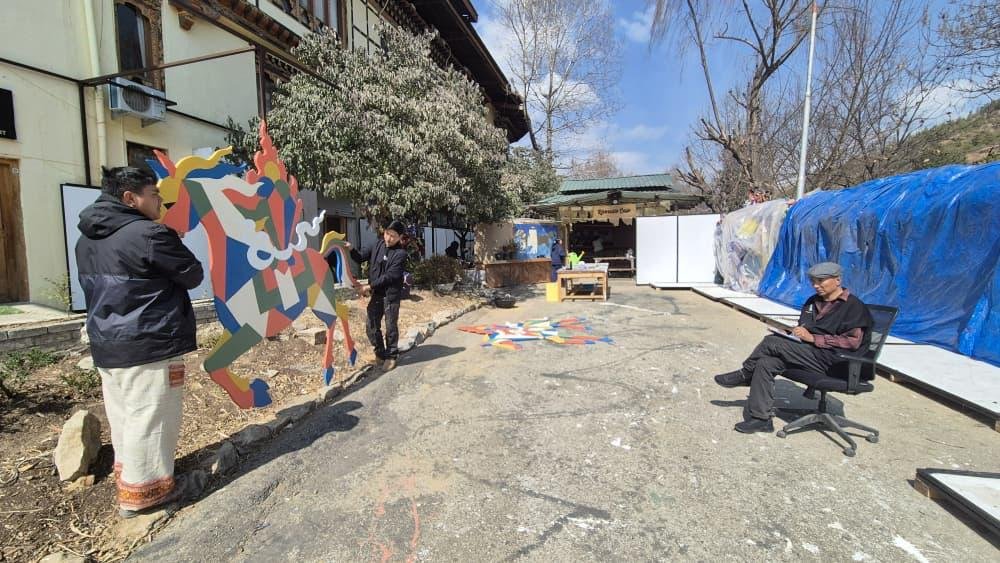
Asha sharing the festival concept and designPreparing the festival groundShovels catching a breakSoiled Lungta flag delivered onsiteOur resource for the Lungta installationsOrganising and keeping our Lungta flags safeA test is mustTesting materials for biodegradable flagsSneak peek of Lungta panel installation at night.jpegArtists and friends at work day and nightTeens spend winter break volunteering for the festival prepPreparing the gate installationsGetting the installations readyGetting the placement rightTinTin and JYT work on finishing the installation
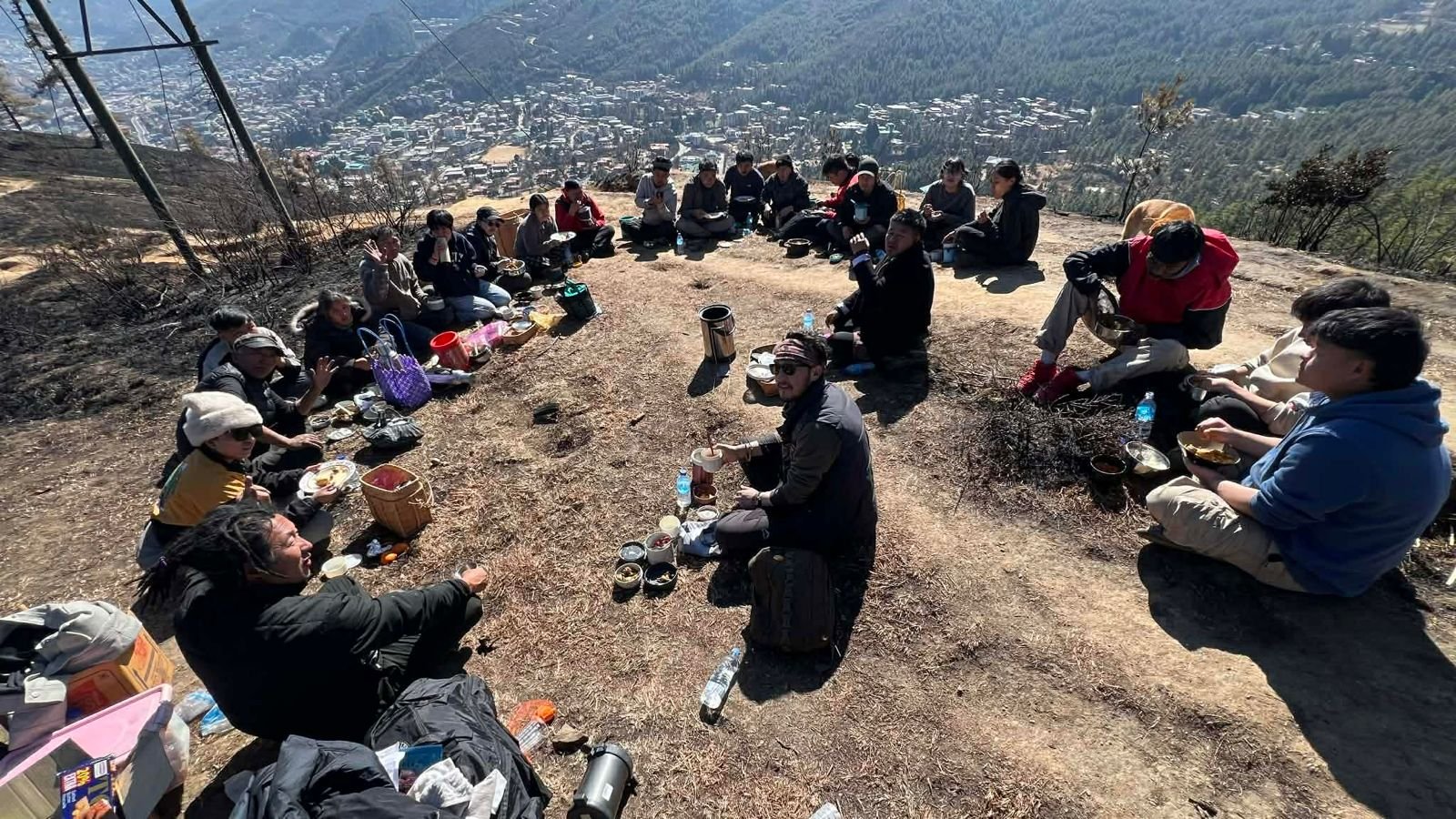
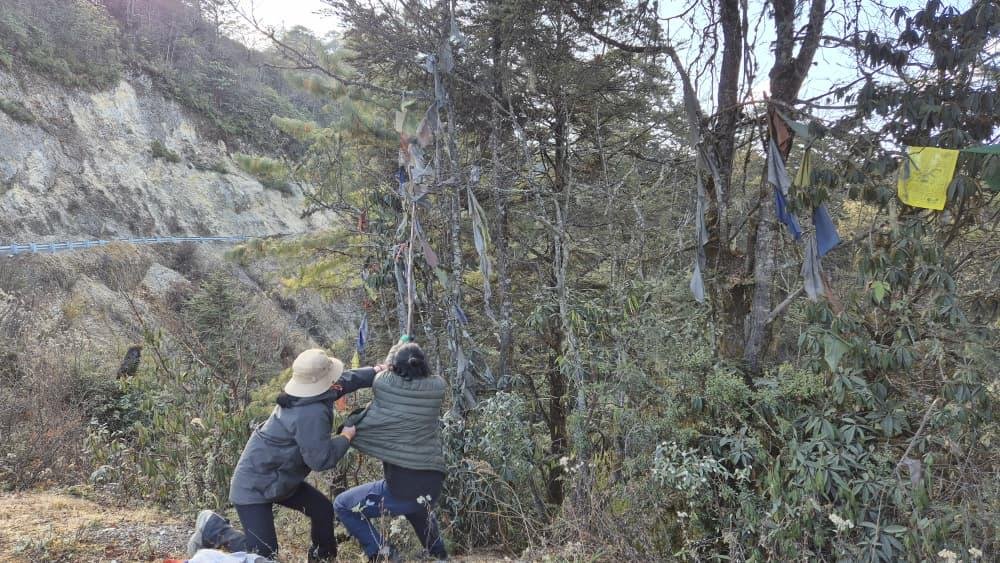
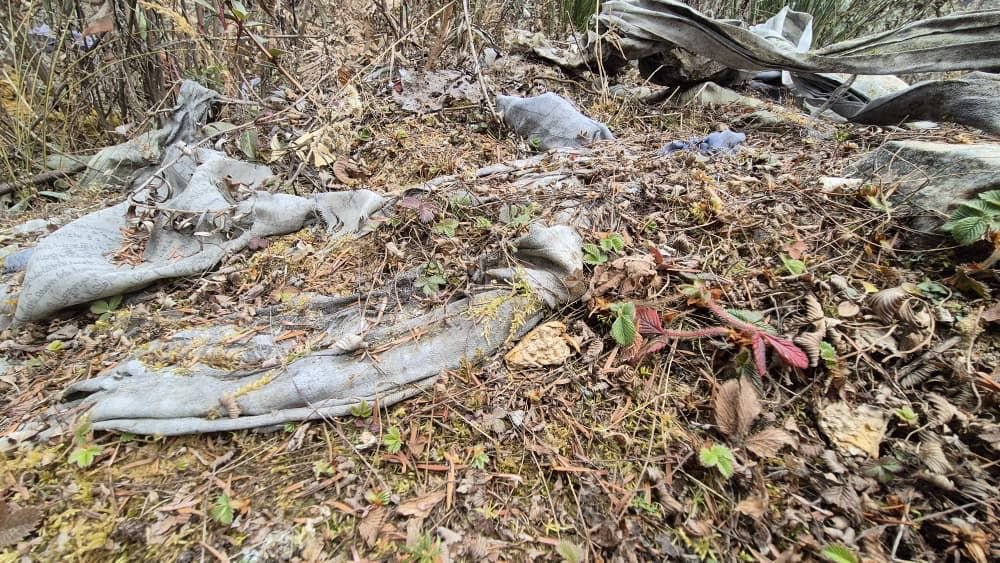
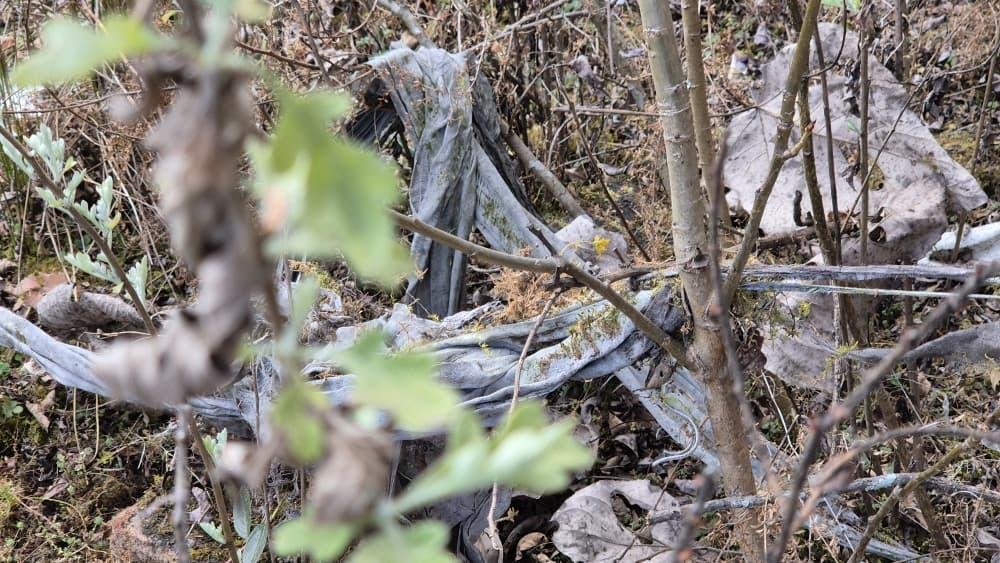
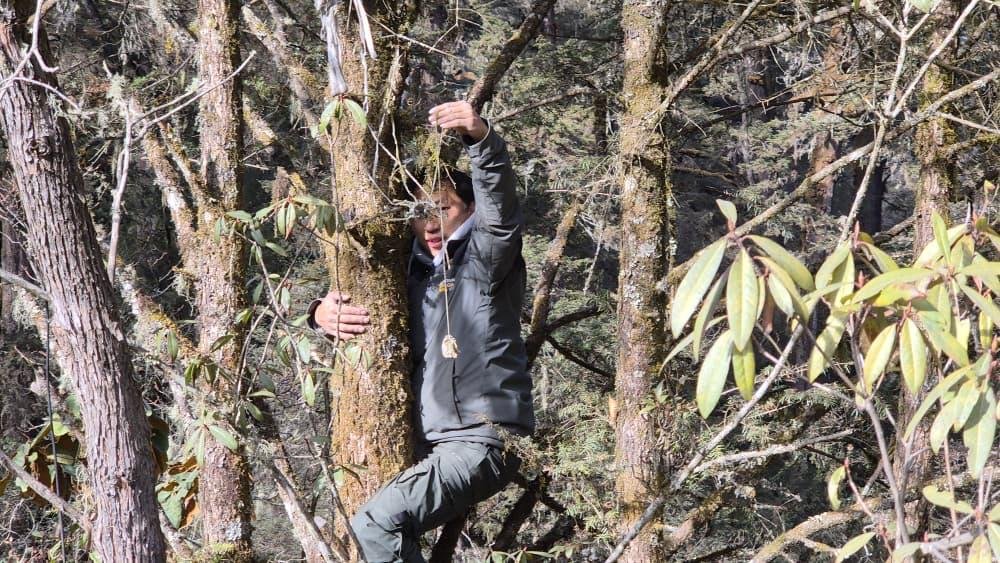
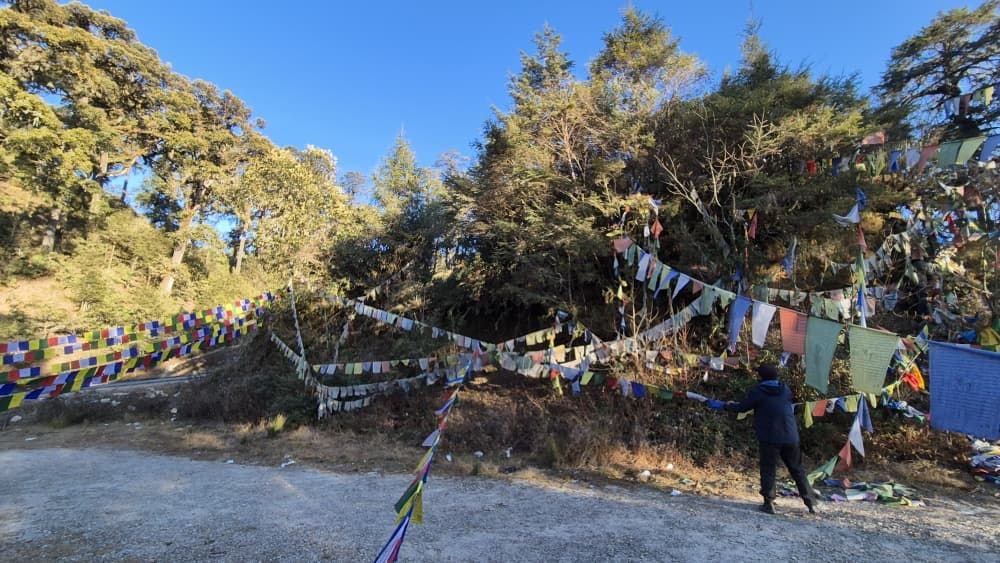
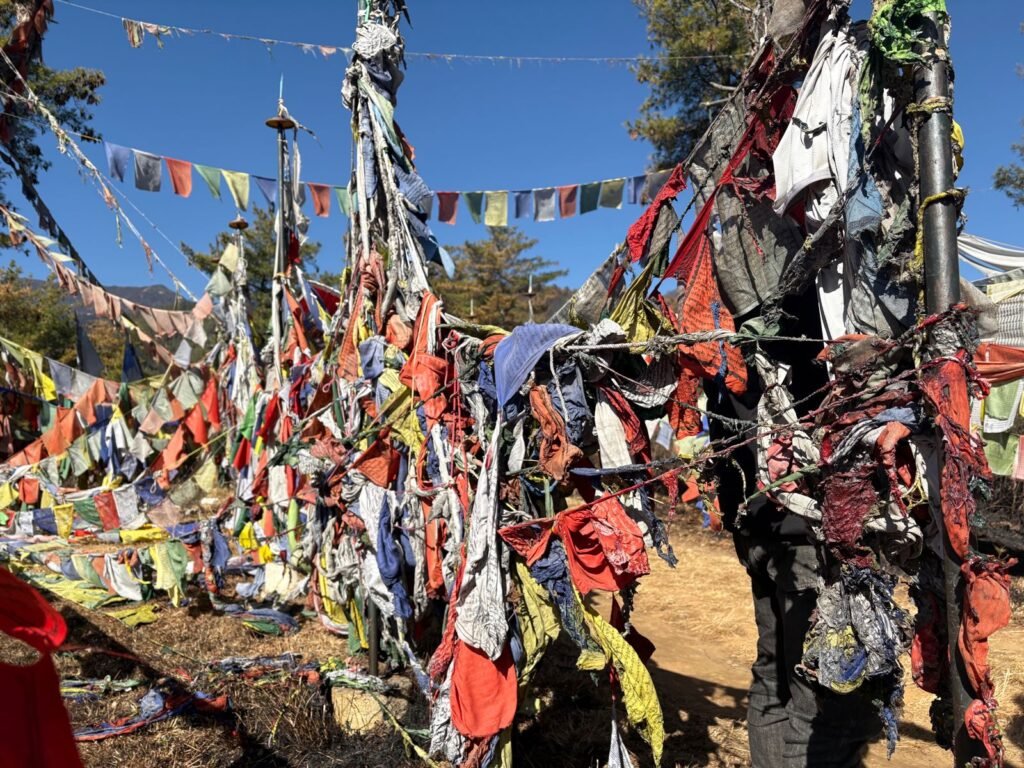
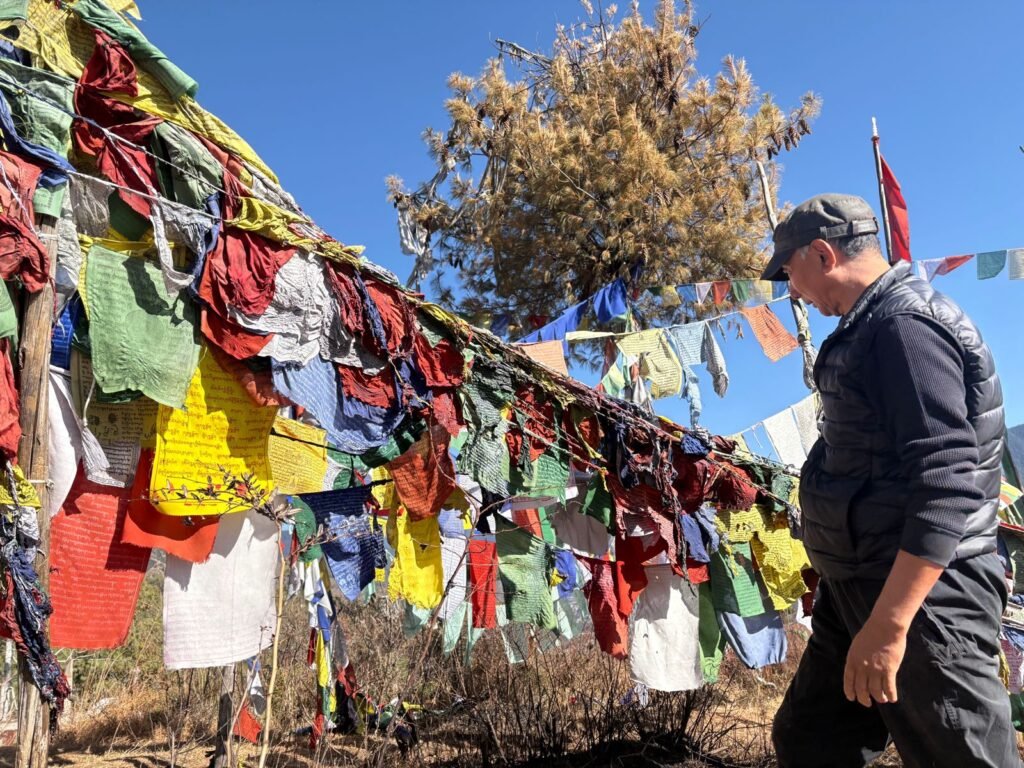
In the spirit of Lungta and the Lungta Art Festival, VAST Bhutan and friends have been on a meaningful journey—collecting old, soiled, and unattended prayer flags from Thimphu, Paro, Punakha, and from the mountains of laya. We often look like a very very big extended family on a picnic.
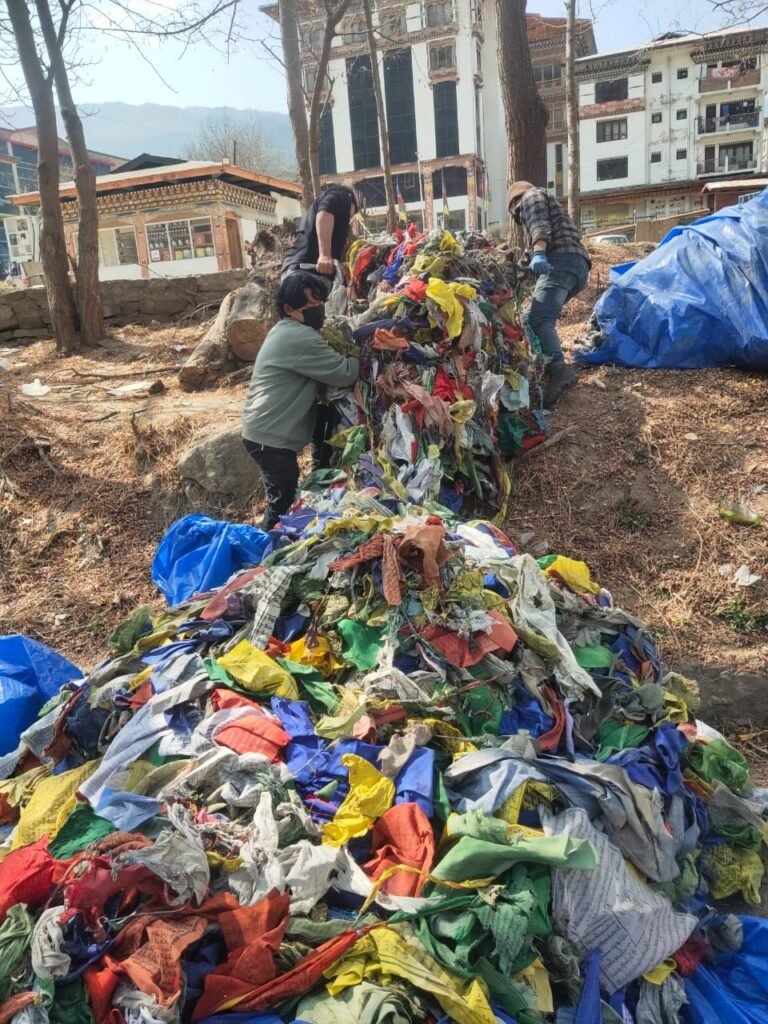
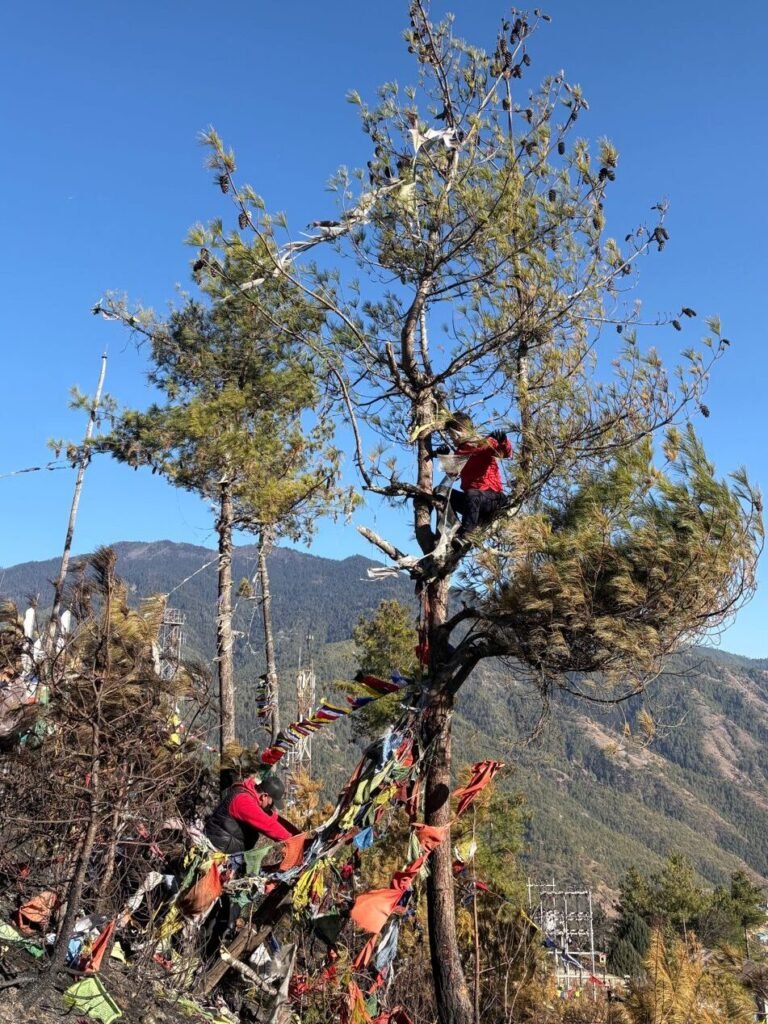
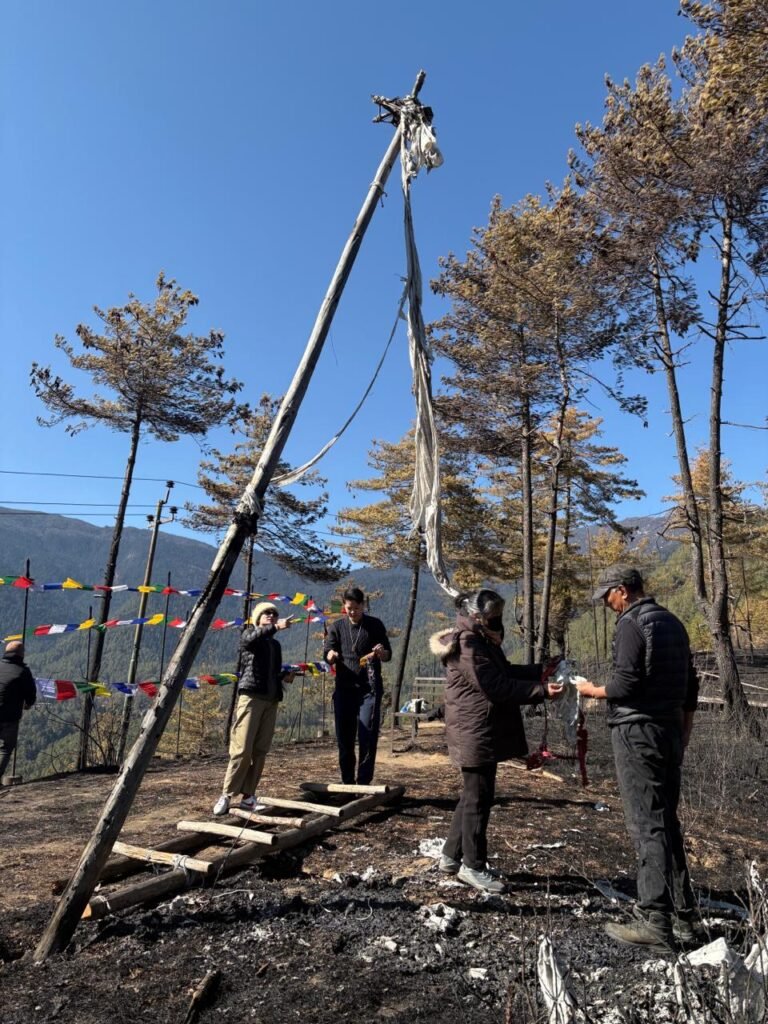
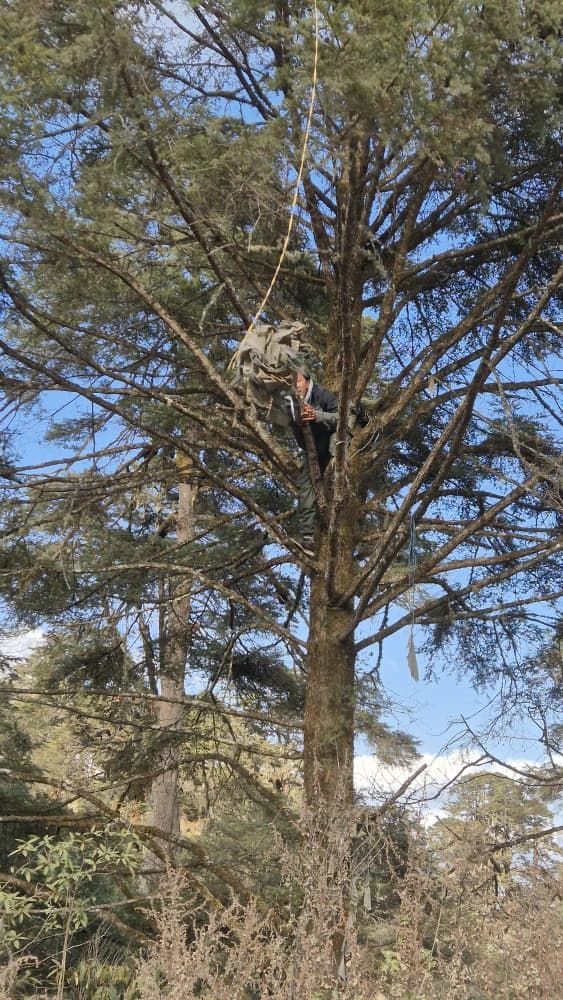
As we reach the locations, we wonder, how do we get the old ones from the trees high up. We are creative people, so we find ways. We carefully gather these weathered and soiled flags, the process becomes one of self-reflection. As we find ways to reach flags on the other side, balancing our steps, walking through thorny plants, shouting at each other to be careful. Then we are also wondering how people managed to climb trees so high. With curiosity driving us, we also found the ticks to do that. You can see Dorji showing us the stone tied to a strong polyester thread. In all that, each intentionally or unintentionally paused and asked: What can I do? How can I contribute? How can I be better? The act of collecting is not merely physical work—it is a quiet acknowledgement that transformation begins within. Through this shared effort, we deepen our understanding of Lungta, recognizing that raising the lungta is also about raising our own awareness and intention.
This ongoing activity is both an environmental effort and a contemplative practice, rooted in respect for our sacred traditions and responsibility toward our natural surroundings.
With every flag collected, we offer a prayer:
May our actions benefit all beings. May our aspirations serve the well-being of the environment and our communities. May this simple act of care ripple outward in unseen yet meaningful ways. This ongoing collection of old and soiled prayer flags marks an important step in the Lungta Art Festival’s journey—honouring tradition while embracing responsibility, and transforming reflection into collective action.
Team work to untangleCollecting the prayer flag remains after the forest fire1..2..3.. pullprayer flags partially buried Layered underground and tangled old flags Dorji found the trick to reach higherPicking the flags touching the groundUntangle the LungtaUp the very very tall pine trees untangle the old prayer flagsMix of cotton and polyester flags after the forest fire
Signup now to visit the 'Lungta @ Potolo' Exhibition happening at Kabjisa, Punakha from 8-18 April 2026.